In development · not playable
One console title, natively on a PC. Not there yet.
Ridgeline is a project built around a compatibility layer. The layer translates what an Xbox Series X|S title asks of its console into what a Windows PC provides. Ridgeline Game Launcher, Ridge Launcher for short, is the program that will start it.
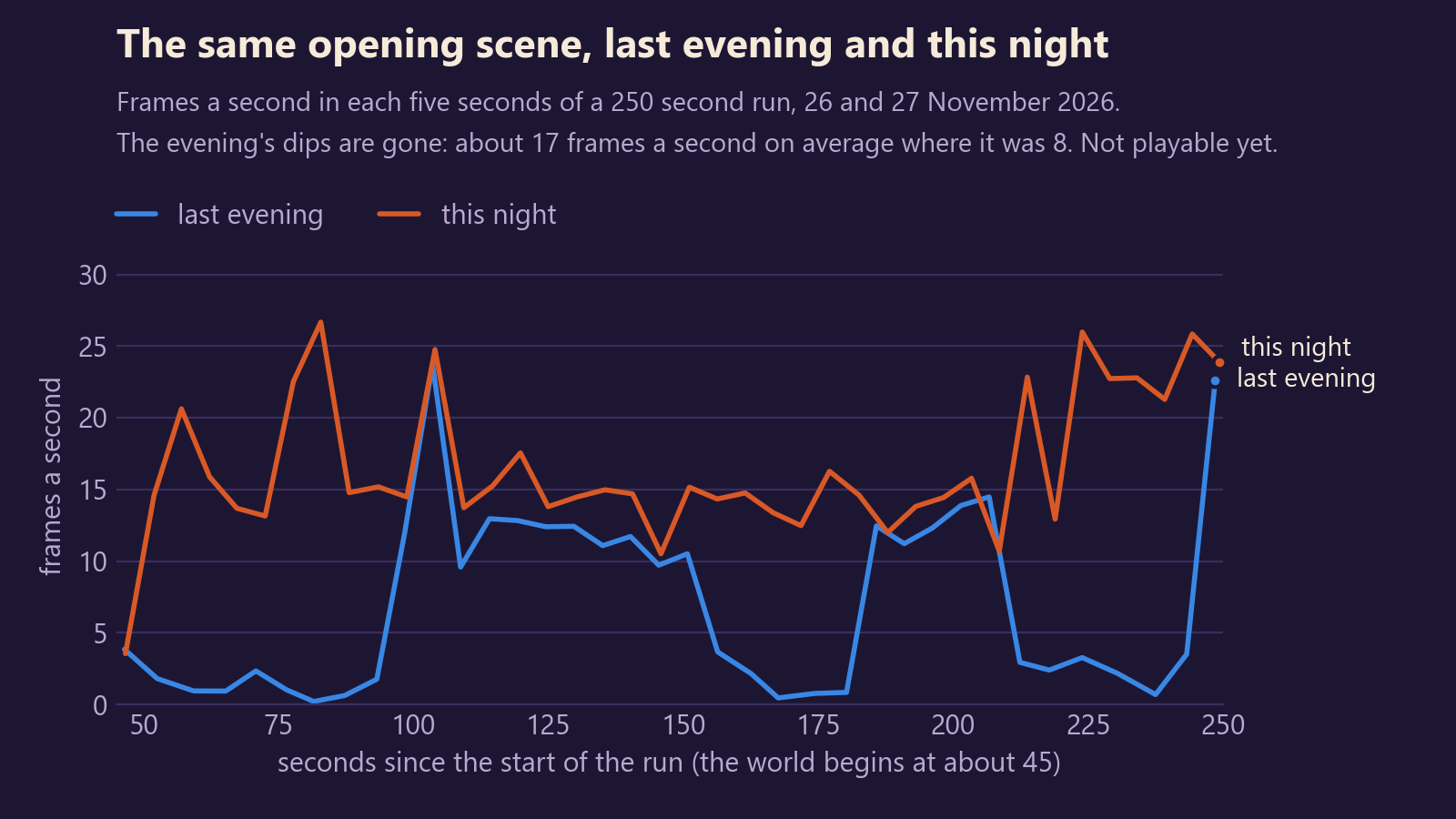
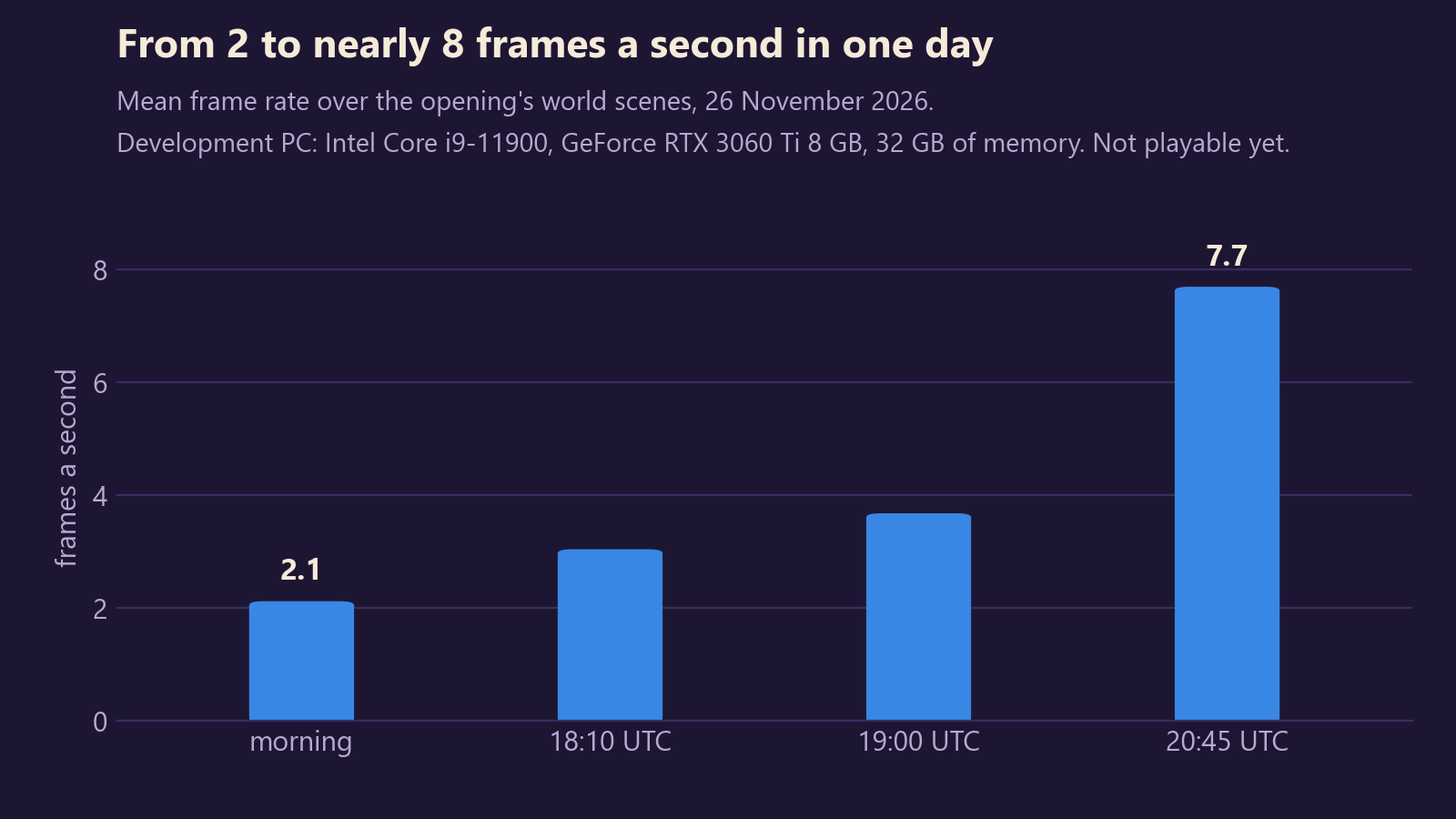
Today the title's opening scene runs through the layer at about 17 frames a second on average on the development PC, without the long pauses it had a day earlier. The picture is lit and textured, but not yet checked against the console's.
- State
- In development
- Picture
- Not verified yet
- Speed
- About 17 frames a second
- Download
- None
- Updated
Status
Where it stands
Five steps, in the order they have to be reached. A step is marked as reached only when a measurement backs it.
-
Reached
The title starts through the layer
The title's own code runs on the PC, with the layer answering for the console.
-
Reached
Frames are rendered
The graphics card draws the frames the title asks for, one after another, without the run ending.
-
Not yet
A stable, correct picture
The last 59 runs of about four minutes all ended without a fault; one run earlier the same night ended in a fault after 51 seconds. Scenes are lit and textured, but not the way the console lights them, and the picture is softer. It is not yet checked against the console's.
-
Not yet
Playable speed
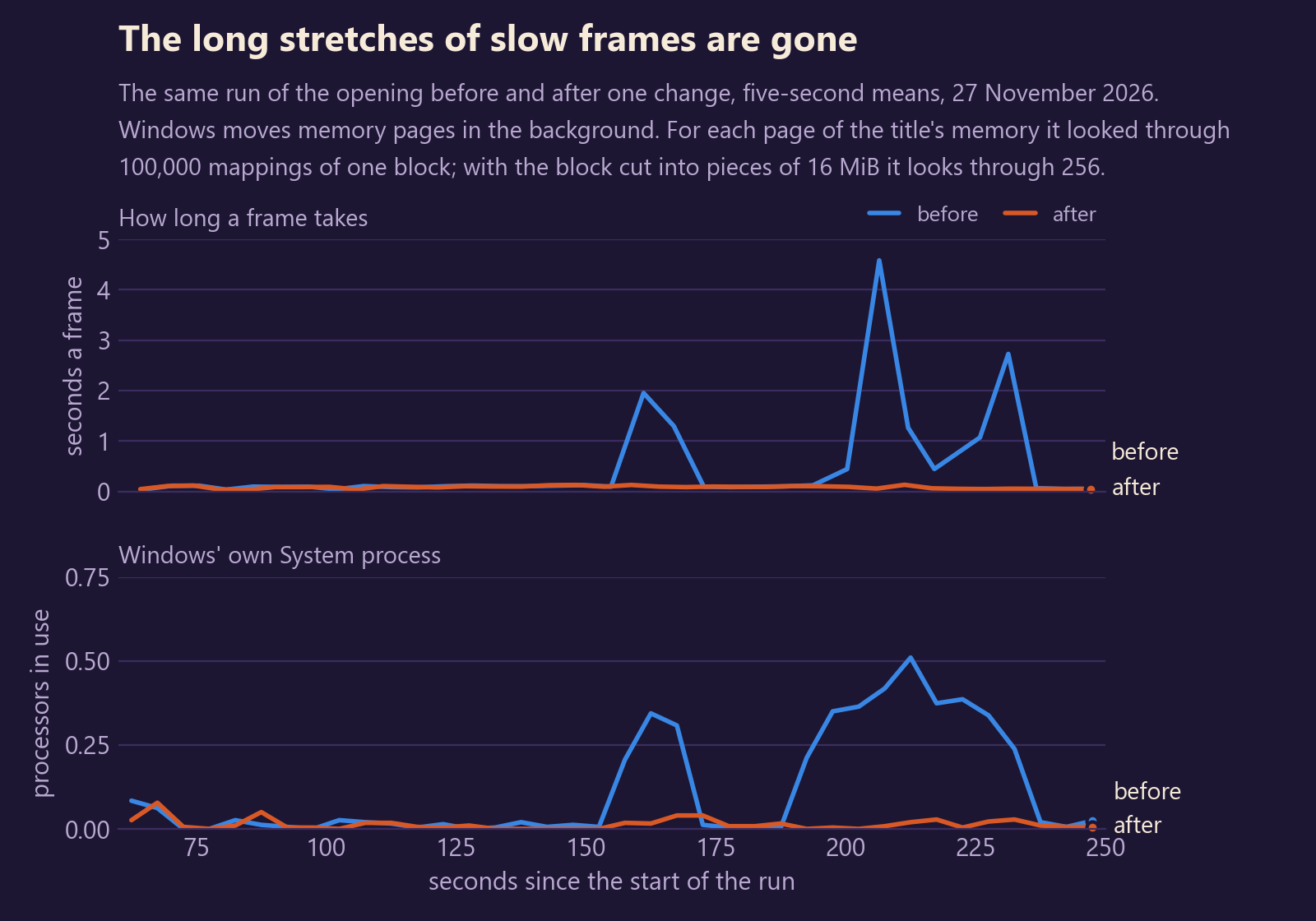
About 17 to 18 frames a second over the opening: 12 to 16 in the heavy outdoor scenes, 25 to 27 in one indoor scene near the end. About every seventh frame takes twice as long as the others; the cause is being looked into. The pauses of seconds are gone, and the graphics card is what limits it now. Playable means a steady rate well above this, through play and not only through an opening.
-
No date
Public release
Nothing can be downloaded, and there is no date.
Last updated .
Measured on 26 and 27 November 2026
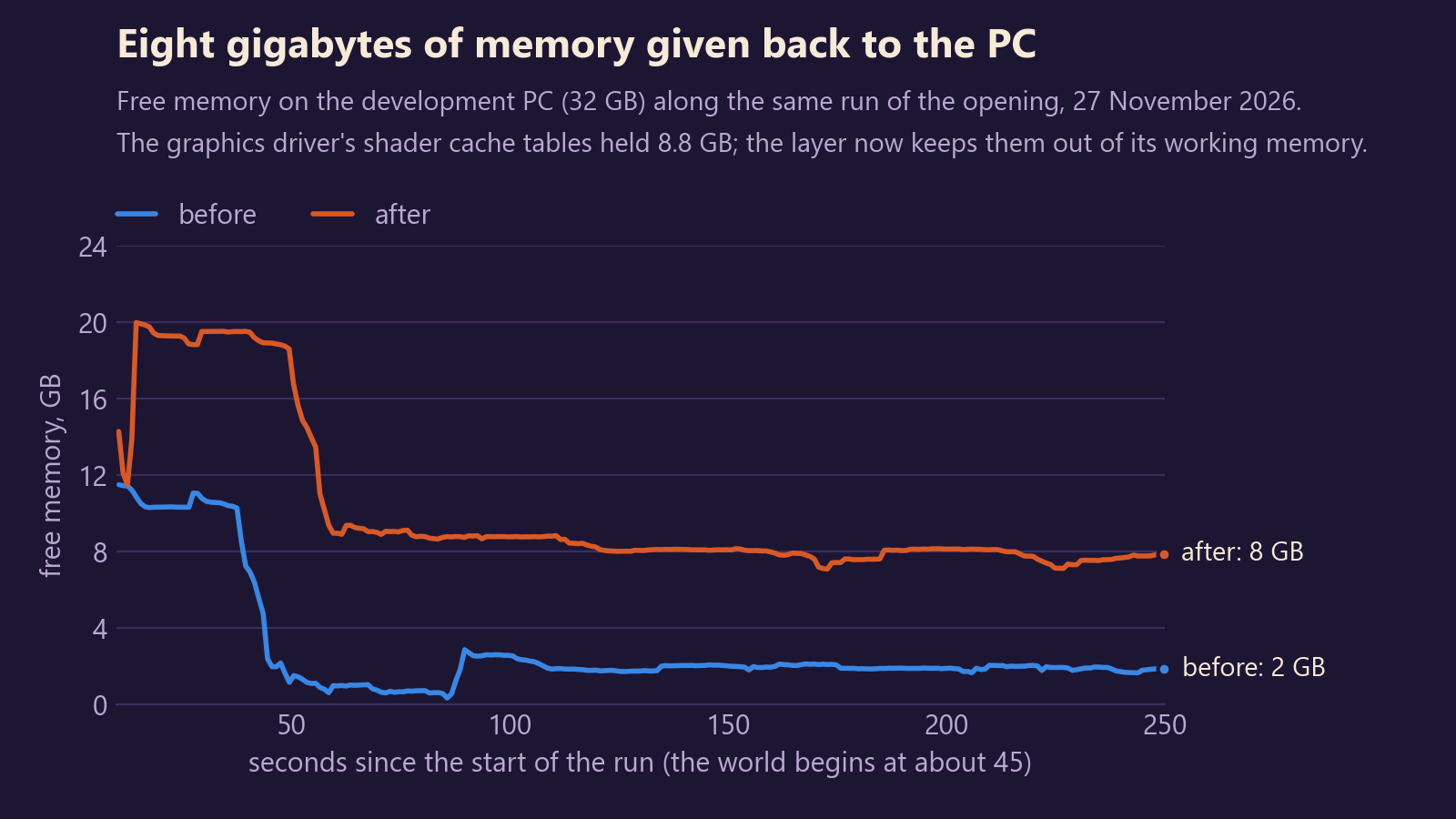
The title's opening scene on one ordinary gaming PC: an Intel Core i9-11900, 32 GB of memory and a GeForce RTX 3060 Ti, a mid-range graphics card from 2020 with 8 GB. Only the opening scene has been measured, run by a script of two key presses. Nothing has been played.
Since 27 November the layer draws its own view in a corner of the picture: frames a second, milliseconds a frame, a graph of the last frame times and the hardware by name. It costs 20 to 36 millionths of a second a frame, of about 55,000.
About
What it is, and what it is not
It is
- A compatibility layer that stands in for the console so a title can run on a PC's own processor and graphics card.
- A launcher, Ridgeline Game Launcher, that will set the layer up and start it.
- Built against a single title, to get one thing right before anything else.
- An independent project.
It is not
- A game. It contains no game files, keys or firmware, and never will.
- A way to get a game. The project gives no files, links or instructions for that.
- Playable. See the status above.
- Available. Nothing called Ridgeline or Ridge Launcher can be downloaded anywhere today.
Discord
Follow the work
The Discord server carries announcements, the current status, the project's own pictures of the work and a place to talk about how this kind of technology works. The rules are short. The first one that matters: no game files, ever.
Join the server Opens discord.gg. You accept the rules before you can write.
FAQ
Questions
Can I play anything with it today?
No. The title's opening scene runs through the layer at about 17 to 19 frames a second on average on the development PC. Only that scene has been measured, run by a script, and the picture is not yet checked for correctness. Nothing has been played.
Can I download it?
No. Nothing called Ridgeline or Ridge Launcher can be downloaded today. If that changes, it is announced here and in the Discord server first. Any file or site offering a download before that is not from us.
When will it be ready?
There is no date. The status on this page changes when something has been measured, not before.
Which title is it?
We do not name it. The project is not affiliated with its publisher, and the name is not ours to use.
Does it include the game?
No, and it never will. The project contains no game files, keys or firmware.
Where do I get the game files?
Not here. The project gives no files, links, instructions or hints for obtaining, dumping or decrypting game files, or for getting past copy protection.
Will it cost money?
The launcher is planned to be free.
What PC will I need?
Too early to say. The measurements on this page come from a PC with an Intel Core i9-11900, a GeForce RTX 3060 Ti with 8 GB and 32 GB of memory, and nothing is playable on it. Requirements are published when there is something that runs well enough to measure them.
Can I help or test?
Not yet. Testing opens when there is something to test, and it will be announced in the Discord server.
Is this affiliated with Microsoft, Xbox or a game publisher?
No. It is an independent project, not affiliated with, endorsed by or sponsored by any of them.
Does this site track me?
No. The page sets no cookies, runs no scripts and loads nothing from another site.