Ridgeline

Media

Video, pictures and charts

The title as the layer draws it on a Windows PC, and the measurements behind it. Every caption says which PC, which part of the title and what the picture does not show. The box in the corner of the newer pictures is the layer's own view, measured while it ran. Nothing here is playable at the speed shown, and nothing can be downloaded.

Video · Pictures · Charts · The project's own

Video

In motion, newest first

In real time: nothing sped up, no frames added in between. No sound.

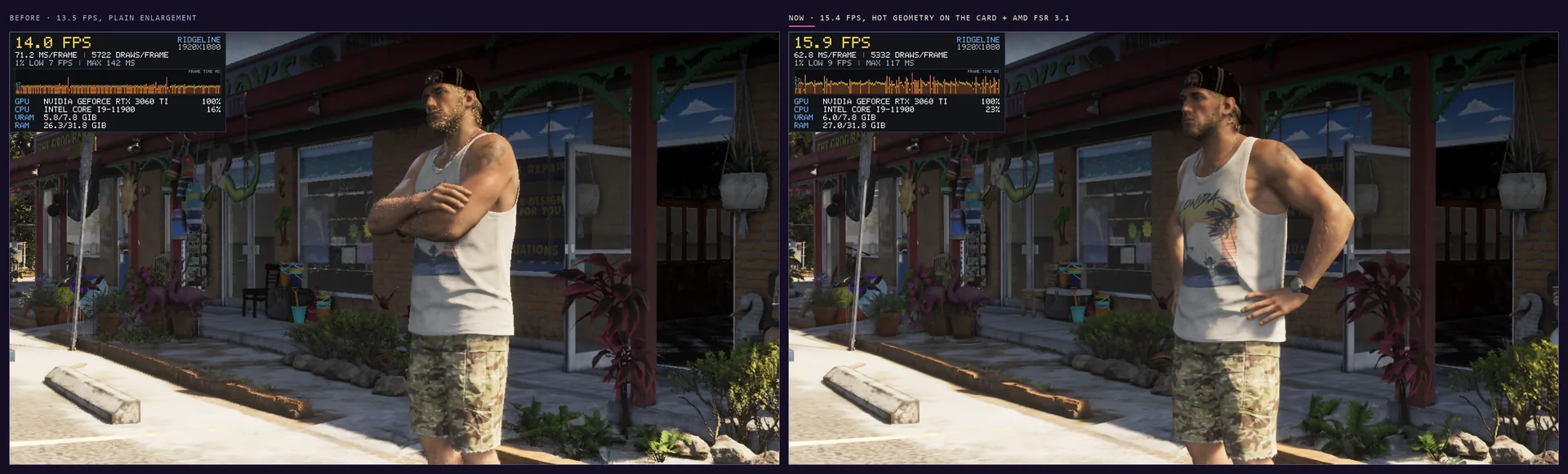
28 November, development PC (GeForce RTX 3060 Ti), the same 12 seconds on the same street from the same save, before and now: a plain enlargement against AMD's FSR 3.1 with the most-used geometry in the graphics card's memory. 13.2 against 14.5 frames a second while filming; 13.5 against 15.4 without.
28 November, a tester's PC (Radeon RX 9070 XT, Ryzen 7 5700X3D, 32 GB): driving over a bridge in the open world and getting out, about 15 frames a second (13 to 17). Filmed with a phone pointed at the tester's screen.
28 November, the same session: taking another car and driving on, about 15 frames a second, with one stall of under a second. The whole 47-minute session's median was 10.3.
27 November, the development PC (GeForce RTX 3060 Ti): the smoothest scene of the title's opening, chosen for that, at 25 to 27 frames a second. The opening as a whole ran at 17 to 18, and it runs by itself: nothing was played.

Pictures

Stills, newest first
The same street in the open world, side by side. Left, before: 13.5 frames a second, with bright speckles on the character's skin and beard. Right, now: 15.4 frames a second, the speckles gone.
28 November, development PC, the same street from the same save. Before: 13.5 frames a second and a plain enlargement in place of the title's upscaler. Now: 15.4, the most-used geometry in the graphics card's memory, and AMD's FSR 3.1 doing the upscaling.
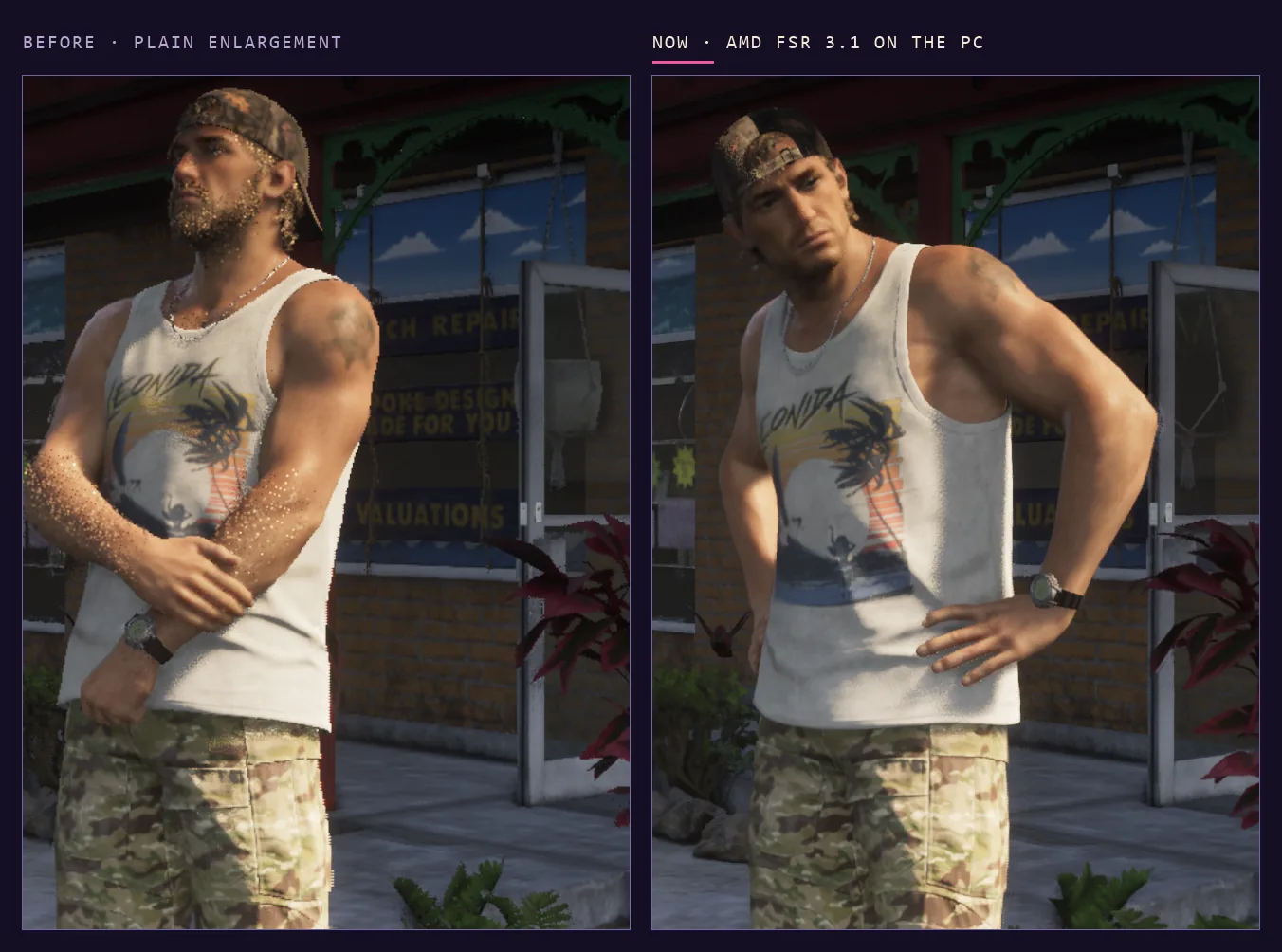
Close-up of the character, side by side: before, speckle noise on skin, beard and cloth; now, clean.
28 November, close-up: the speckle noise on skin, beard and cloth before, gone now. The pose differs because the title's idle animation goes on.
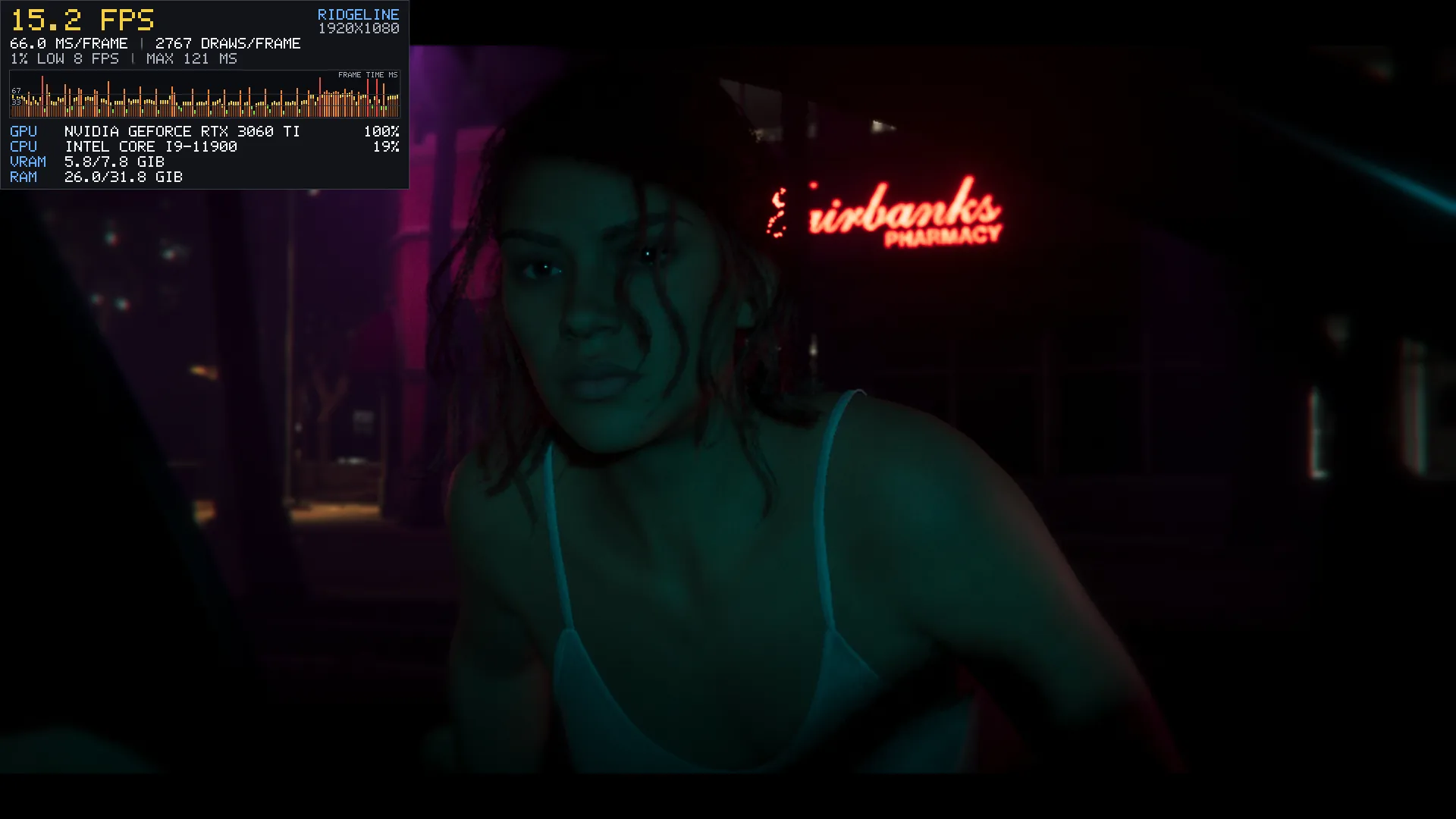
The title's opening: a face under a neon sign at night. The layer's view in the corner reads 15.2 frames a second.
27 November, development PC, the opening: a face under a neon sign at night. 15.2 frames a second in the layer's view.
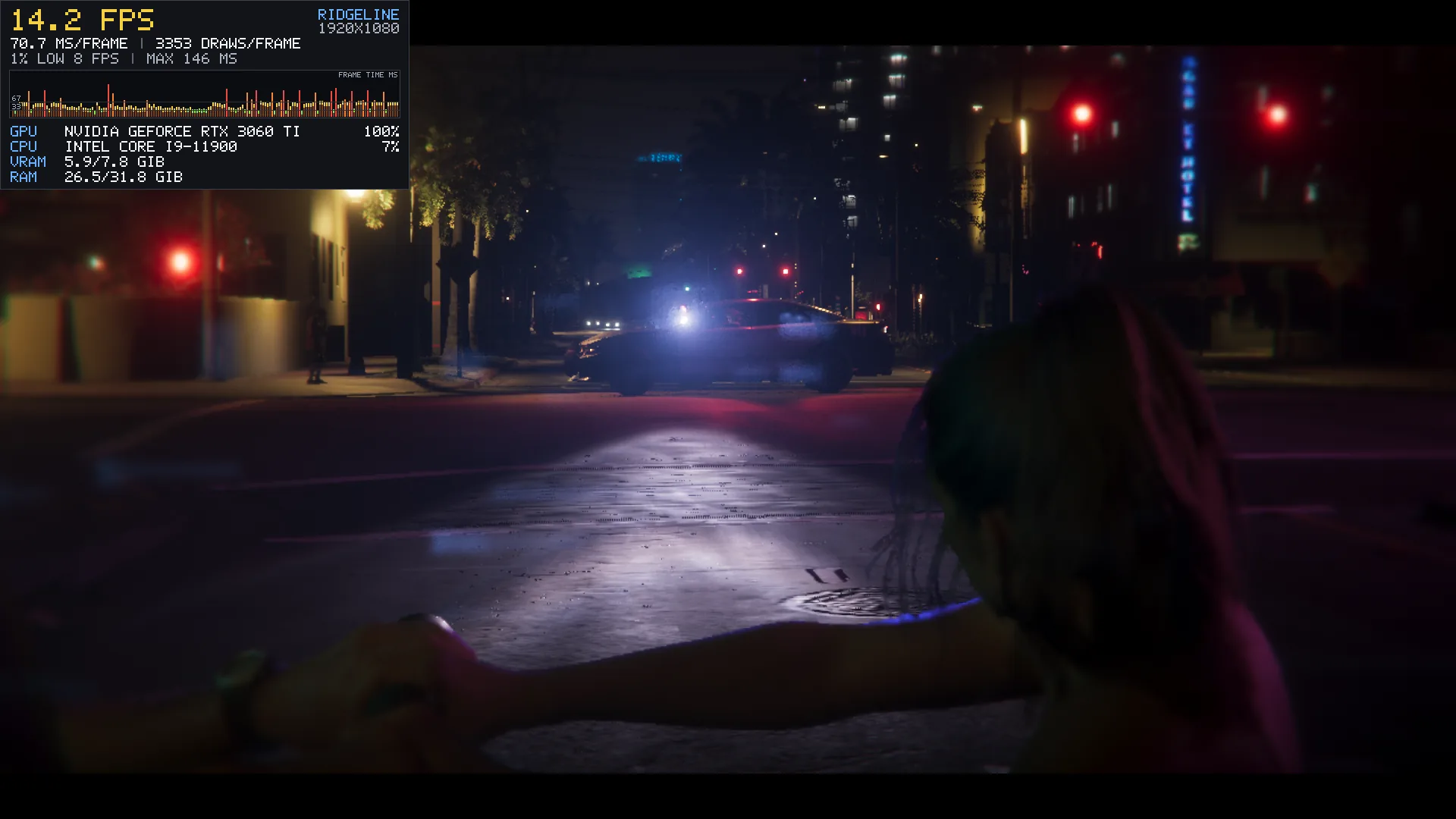
The title's opening: a street at night, a car with its lights on far off. The layer's view in the corner reads 14.2 frames a second.
27 November, development PC, the opening: a street at night, a car with its lights on far off. 14.2 frames a second in the layer's view.
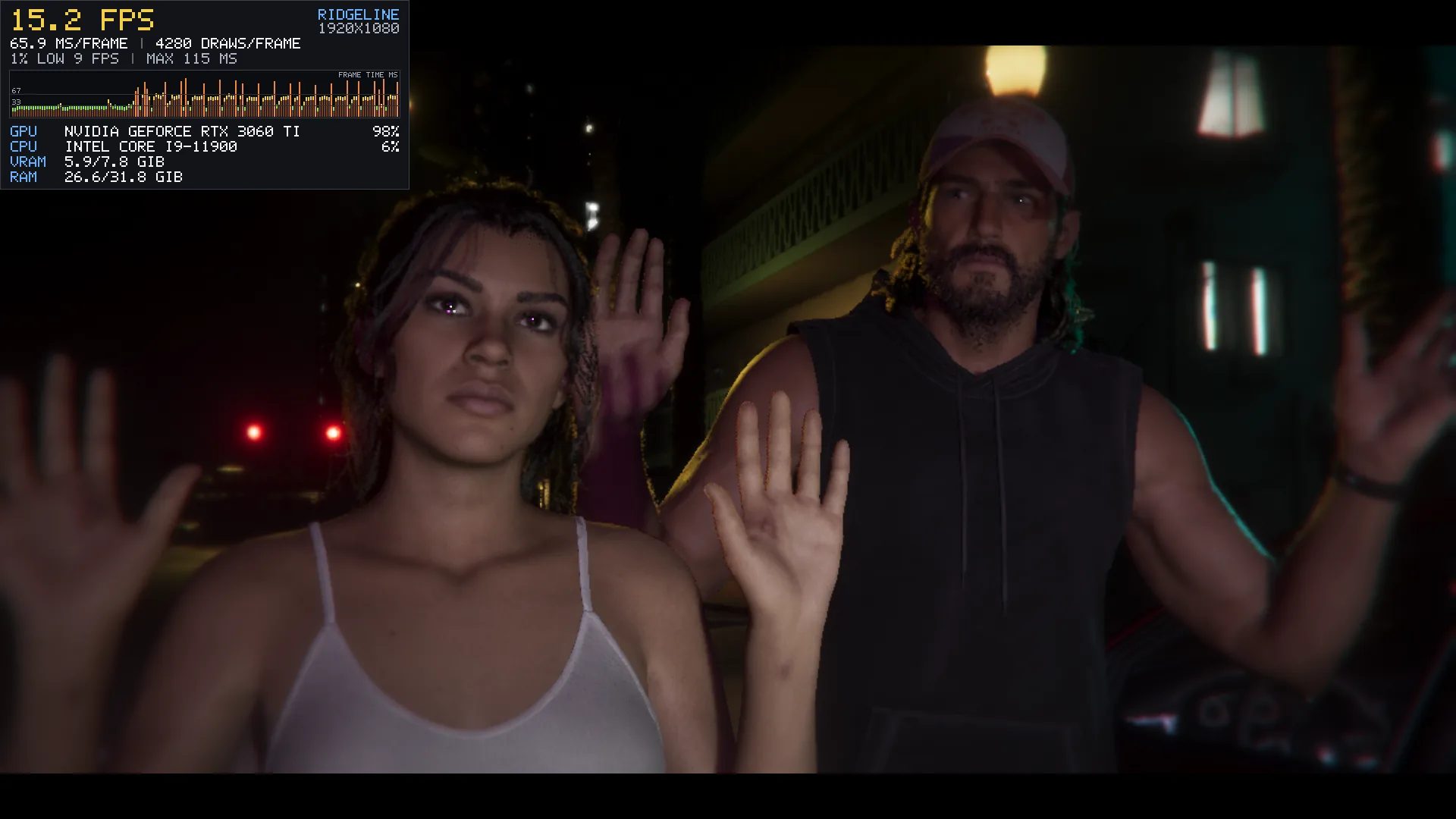
The title's opening: two people with their hands up, lit from the front. The layer's view in the corner reads 15.2 frames a second.
27 November, development PC, the opening: two people with their hands up, lit from the front. 15.2 frames a second in the layer's view.
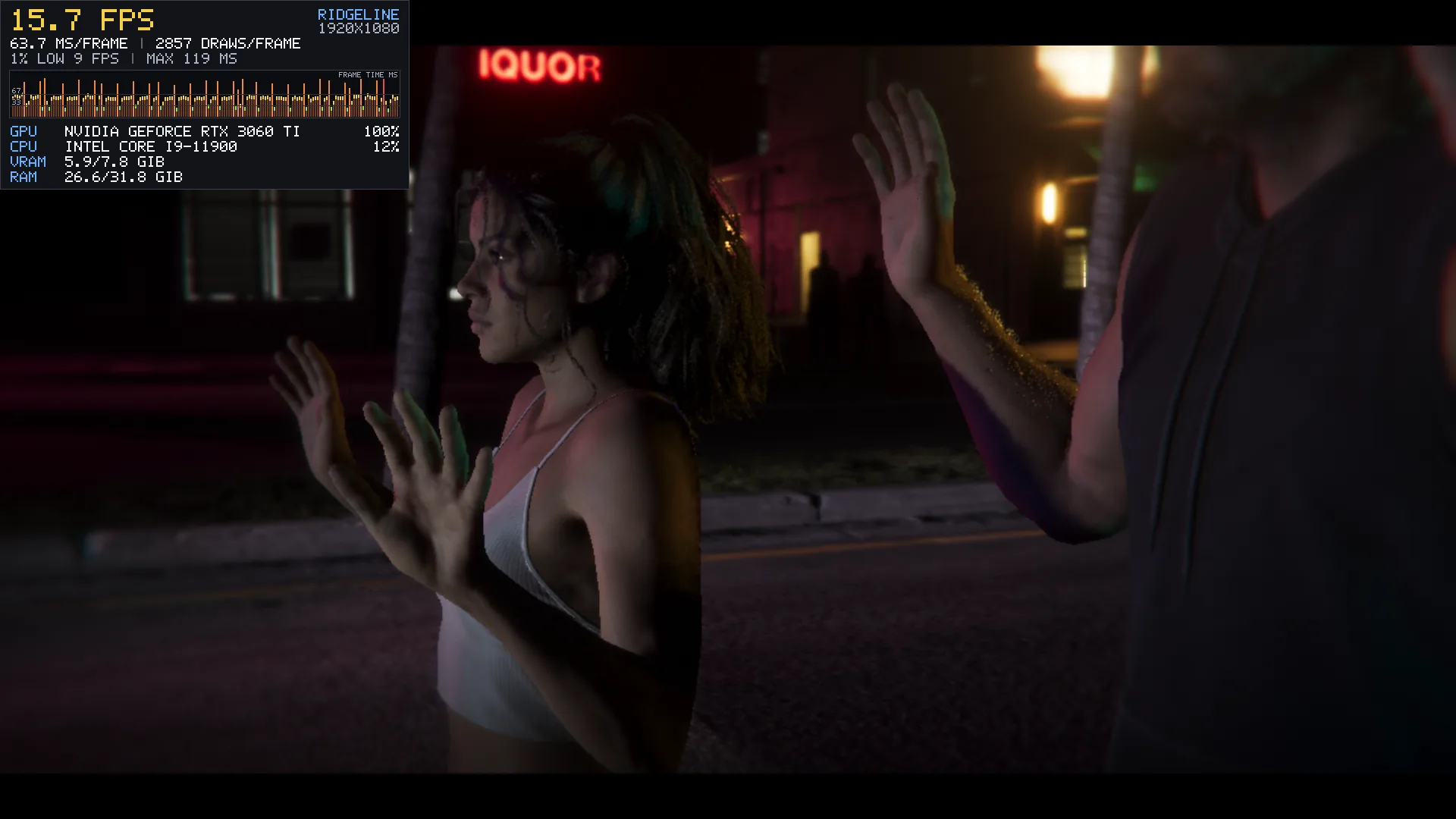
The title's opening: a woman by a road at night, a shop sign behind her. The layer's view in the corner reads 15.7 frames a second.
27 November, development PC, the opening: a woman by a road at night, a shop sign behind her. 15.7 frames a second in the layer's view.
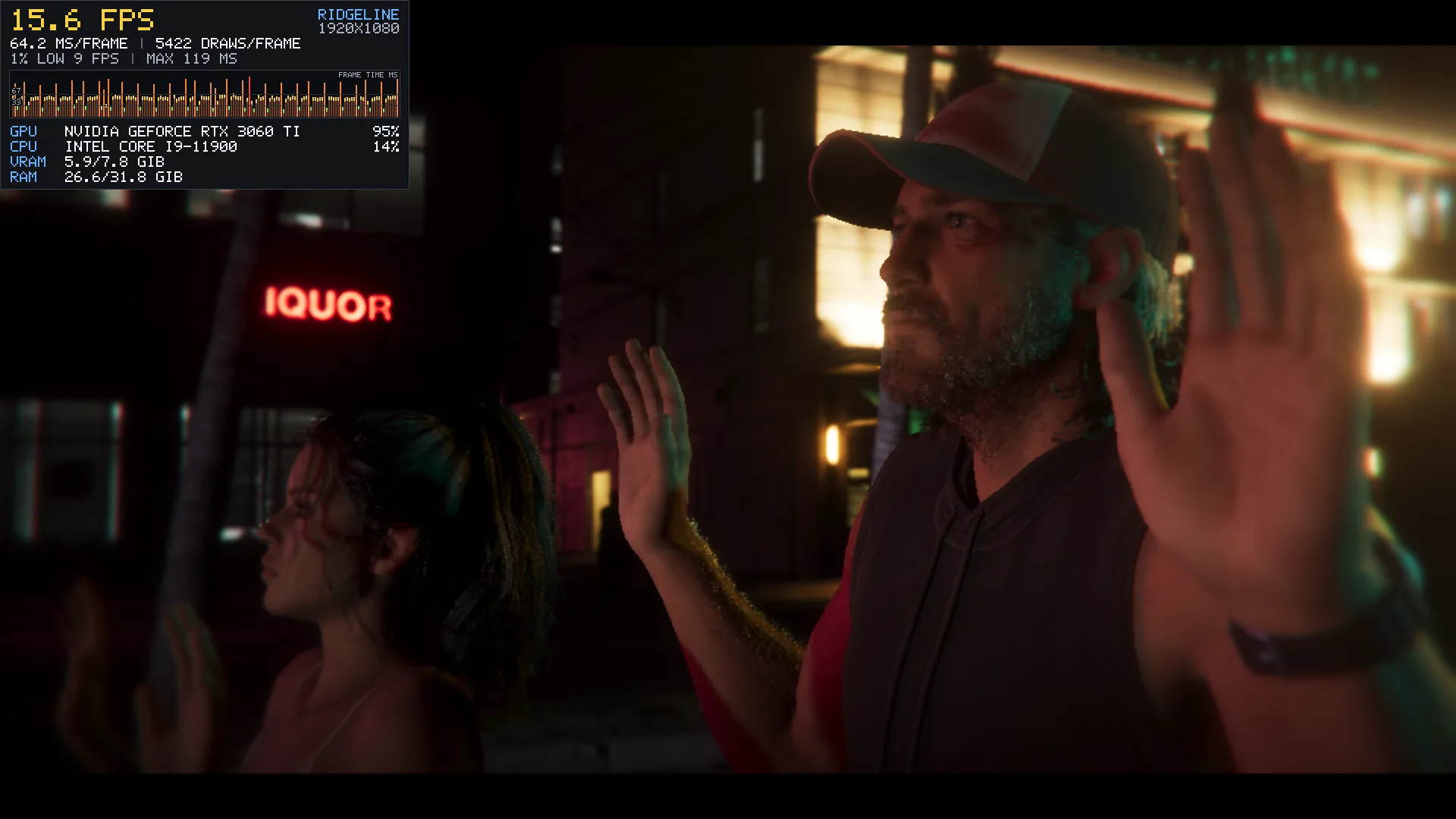
The title's opening: a man in a cap, hands up, shop fronts behind. The layer's view in the corner reads 15.6 frames a second.
27 November, development PC, the opening: a man in a cap, hands up, shop fronts behind. 15.6 frames a second in the layer's view.
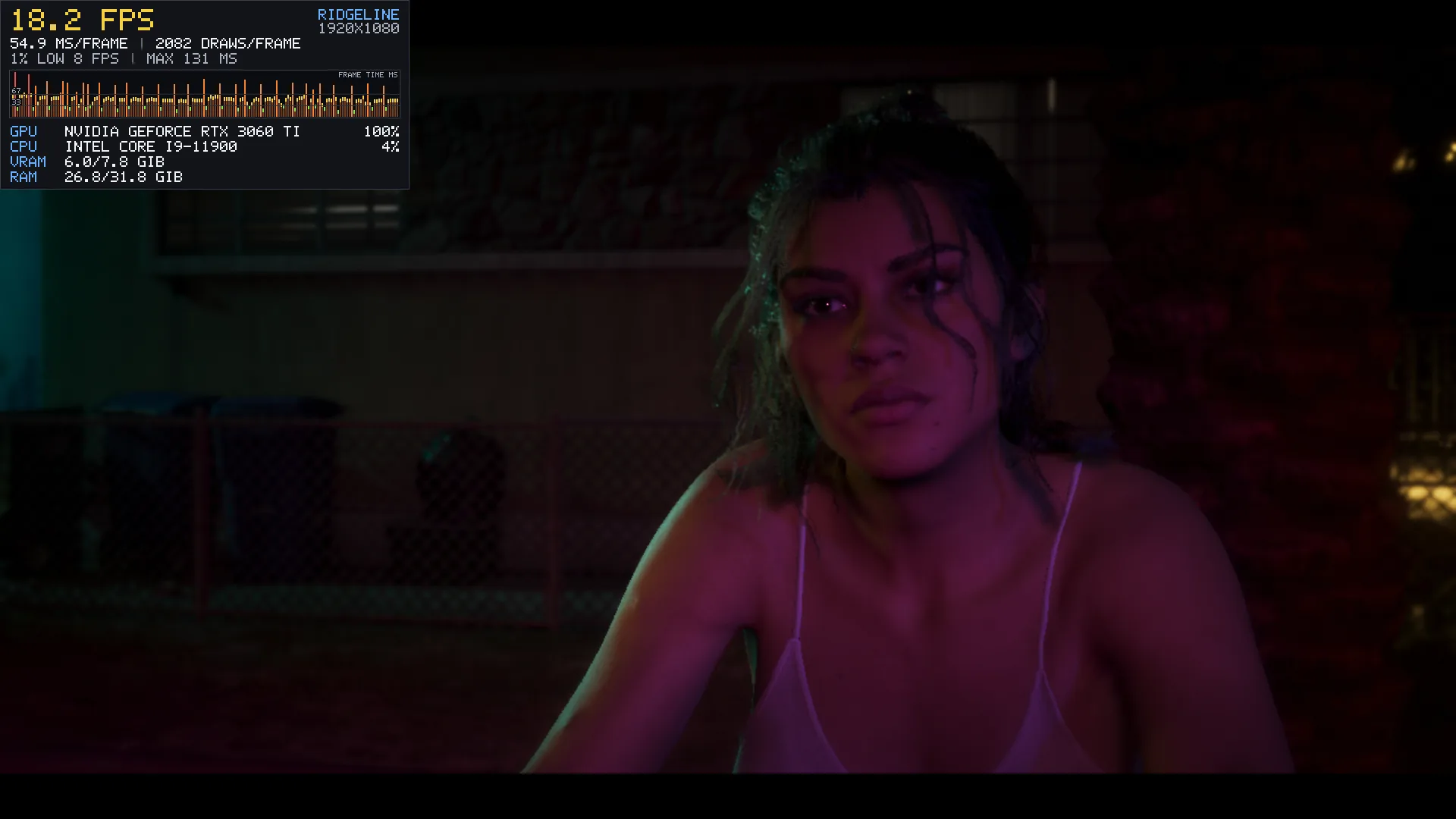
The title's opening: a face in pink light, a fence behind. The layer's view in the corner reads 18.2 frames a second.
27 November, development PC, the opening: a face in pink light, a fence behind. 18.2 frames a second in the layer's view.
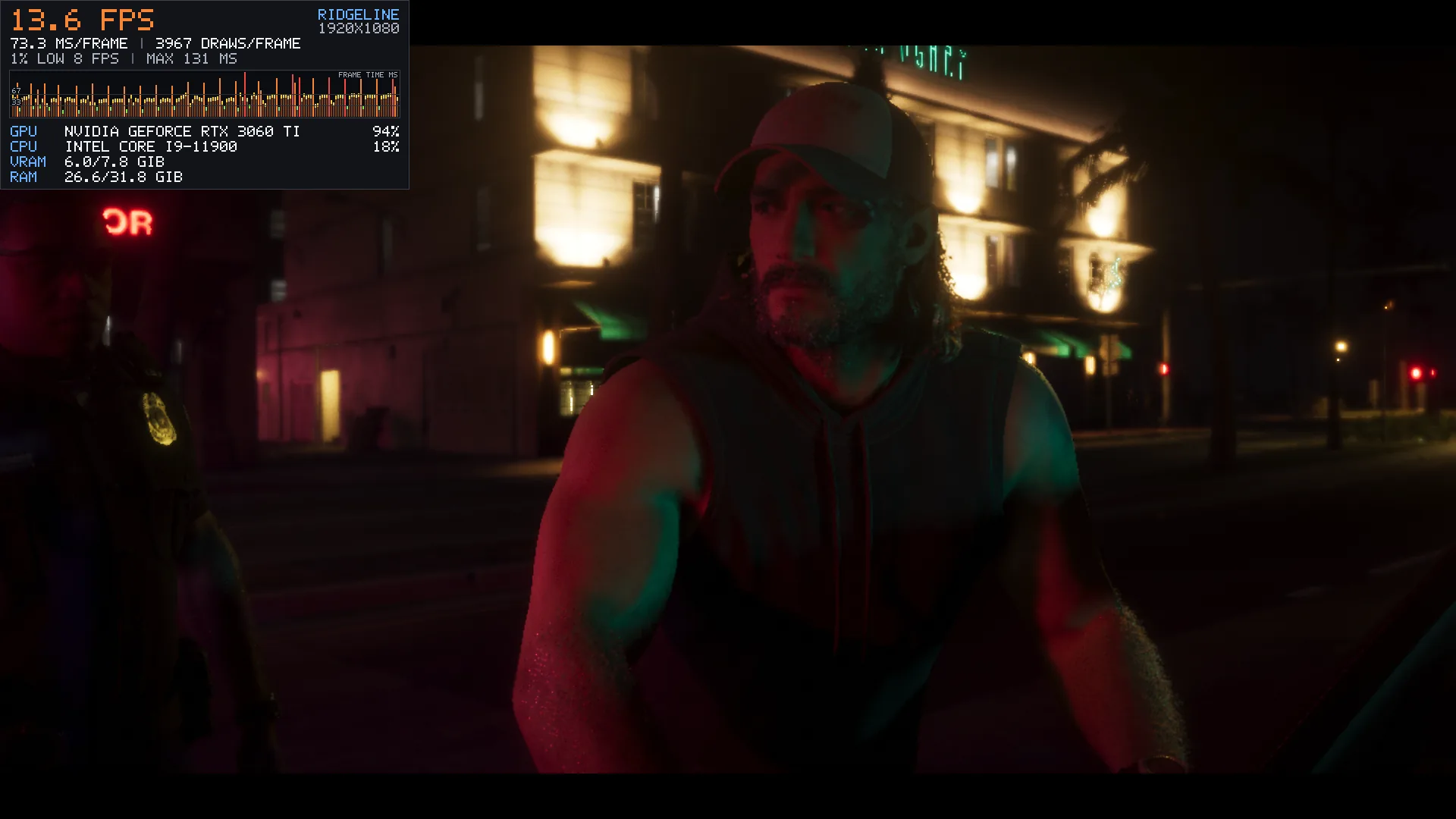
The title's opening: a man crouching in a street at night. The layer's view in the corner reads 13.6 frames a second.
27 November, development PC, the opening: a man crouching in a street at night. 13.6 frames a second in the layer's view.
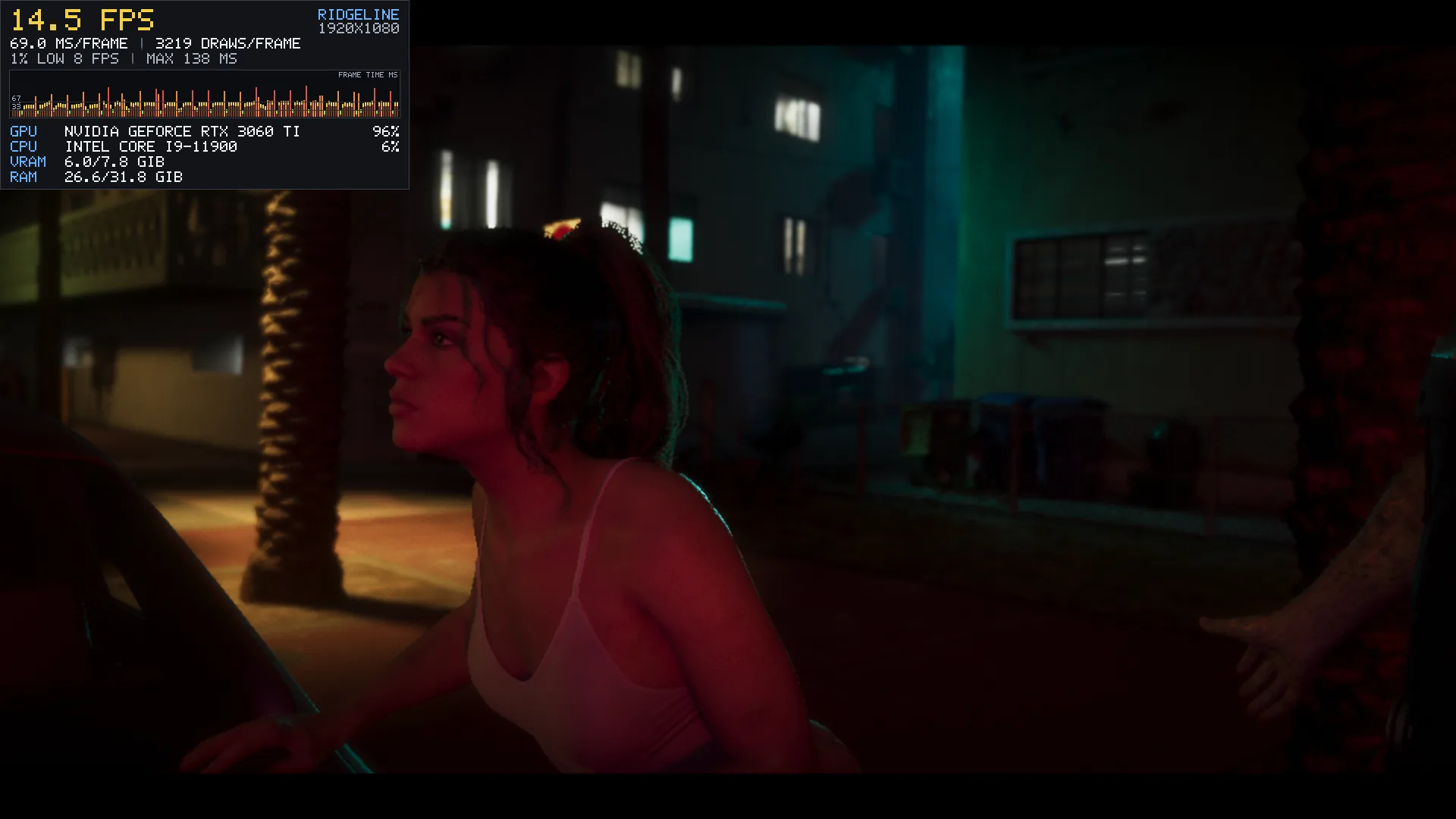
The title's opening: a woman crouching by a palm at night. The layer's view in the corner reads 14.5 frames a second.
27 November, development PC, the opening: a woman crouching by a palm at night. 14.5 frames a second in the layer's view.
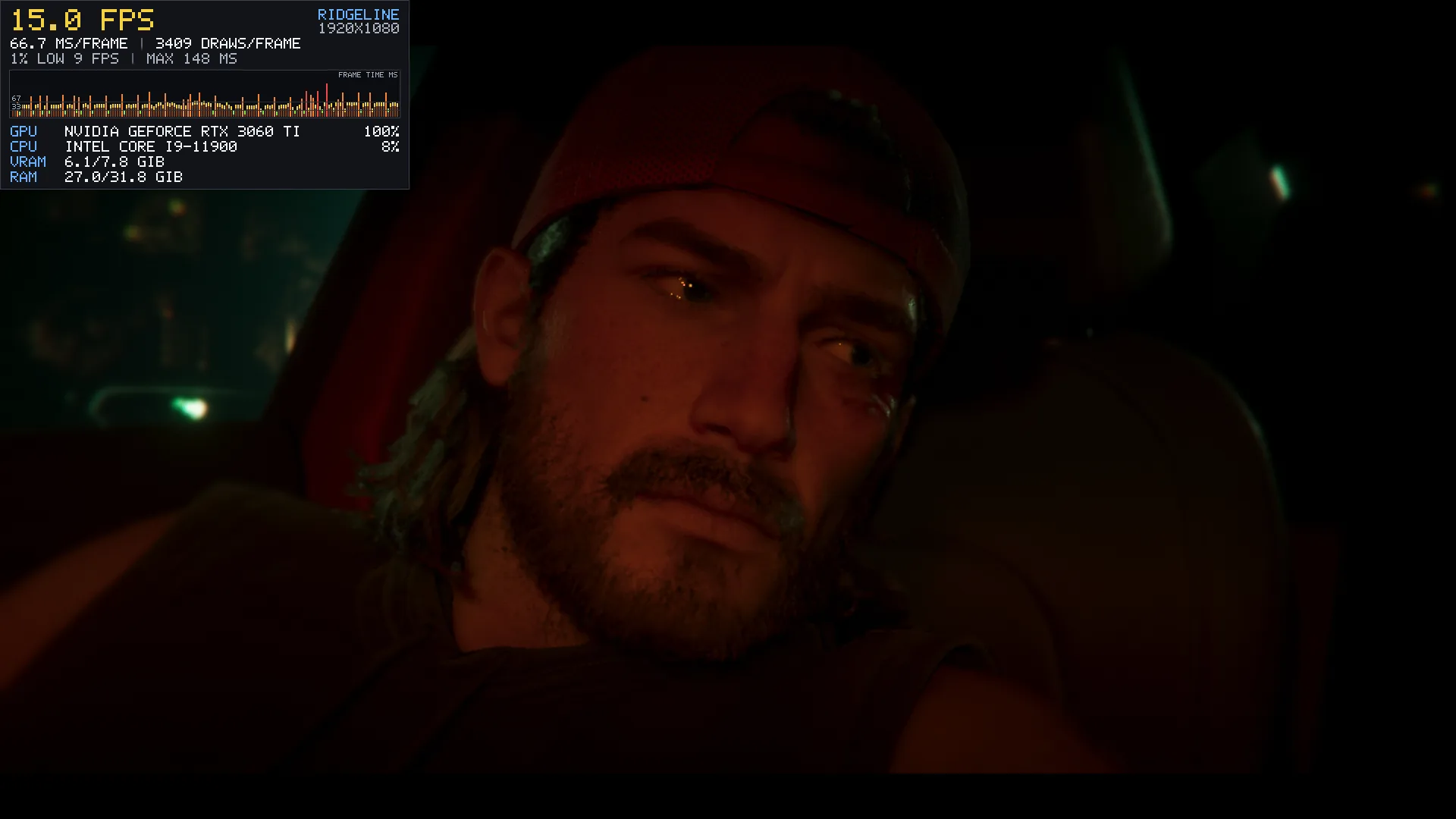
The title's opening: a man in a car, in red light. The layer's view in the corner reads 15.0 frames a second.
27 November, development PC, the opening: a man in a car, in red light. 15.0 frames a second in the layer's view.
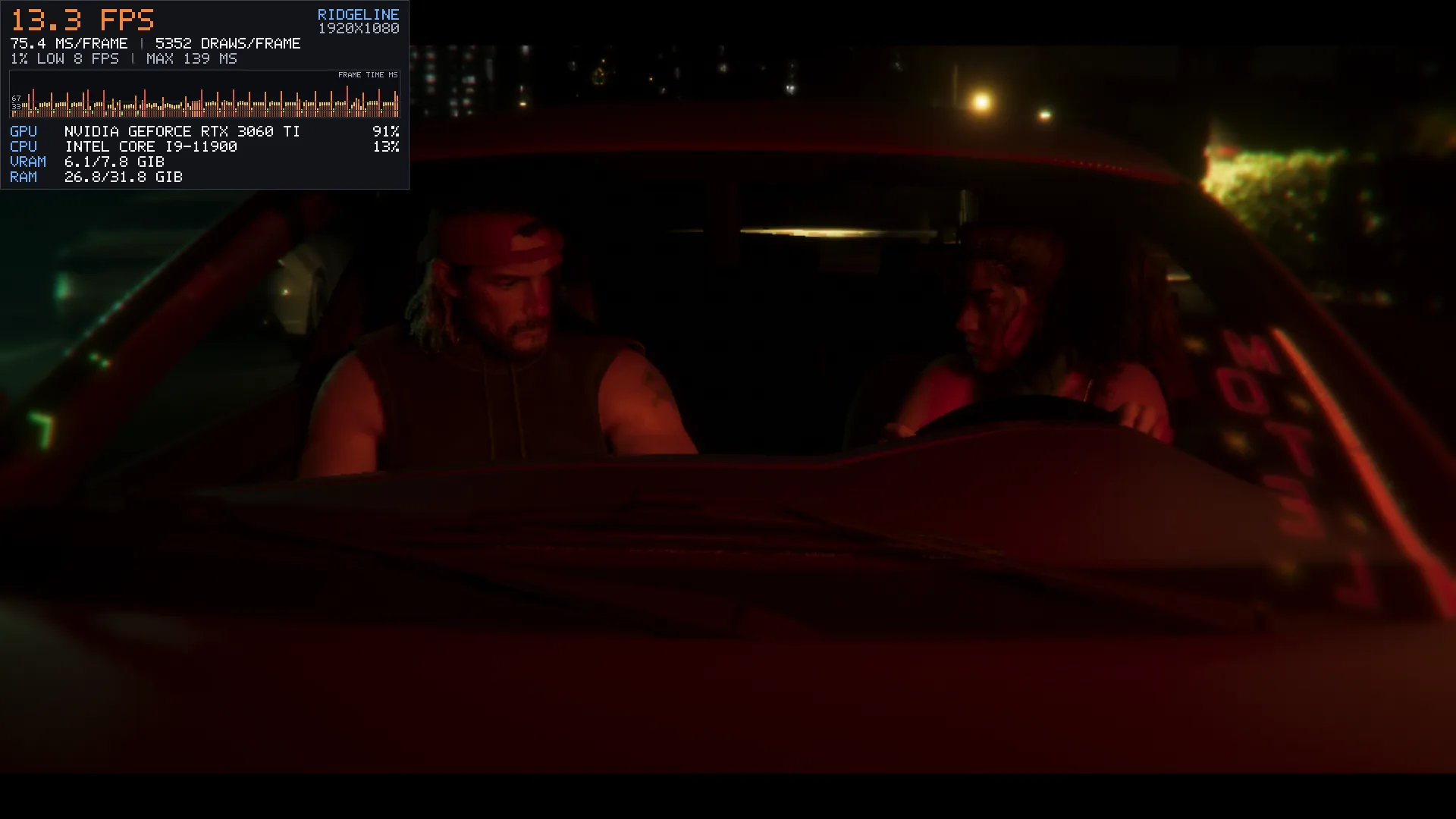
The title's opening: two people in a car seen through the windscreen. The layer's view in the corner reads 13.3 frames a second.
27 November, development PC, the opening: two people in a car seen through the windscreen. 13.3 frames a second in the layer's view.
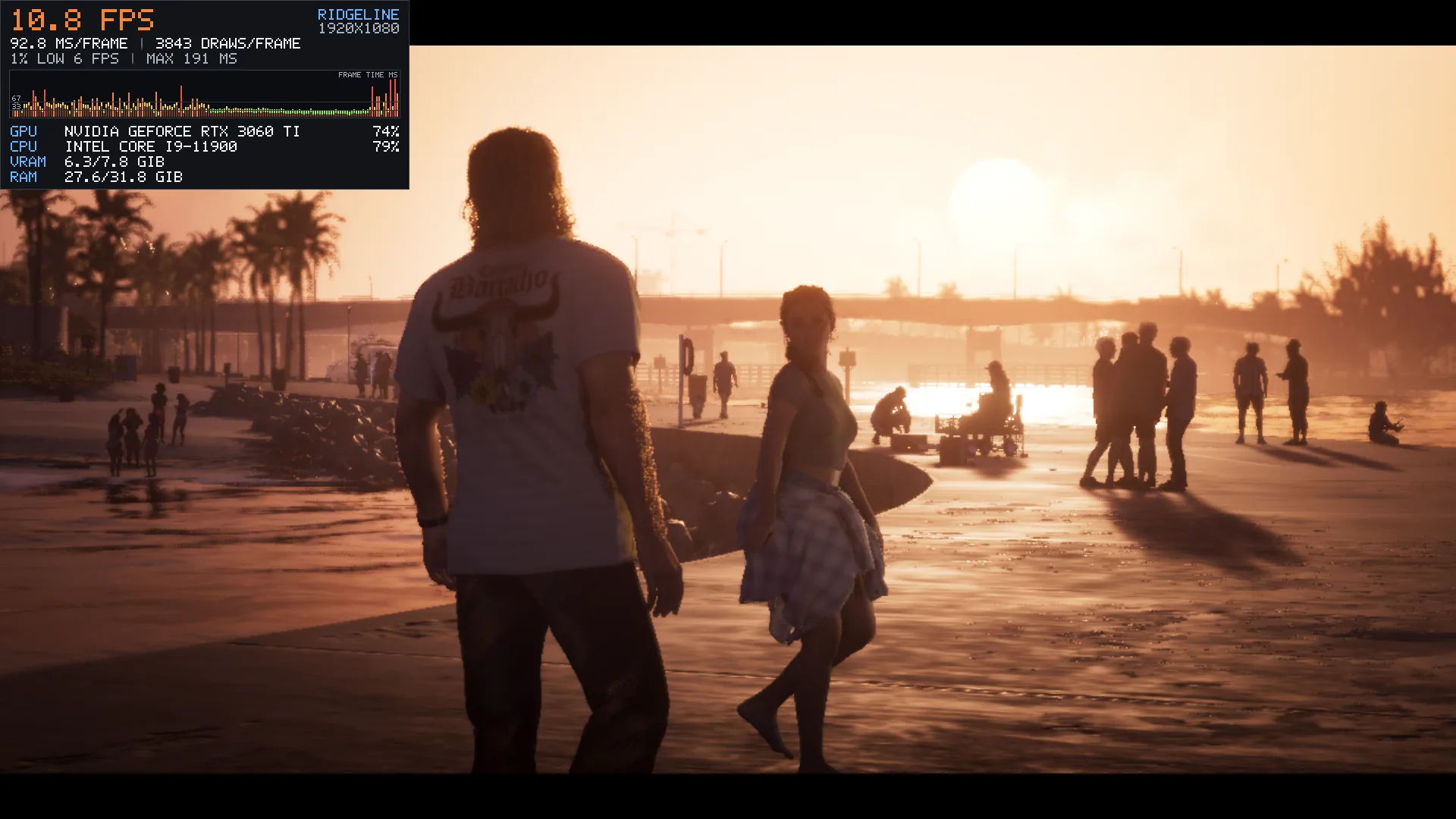
The title's opening: a beach at sunset with people walking. The layer's view in the corner reads 10.8 frames a second.
27 November, development PC, the opening: a beach at sunset with people walking. 10.8 frames a second in the layer's view.
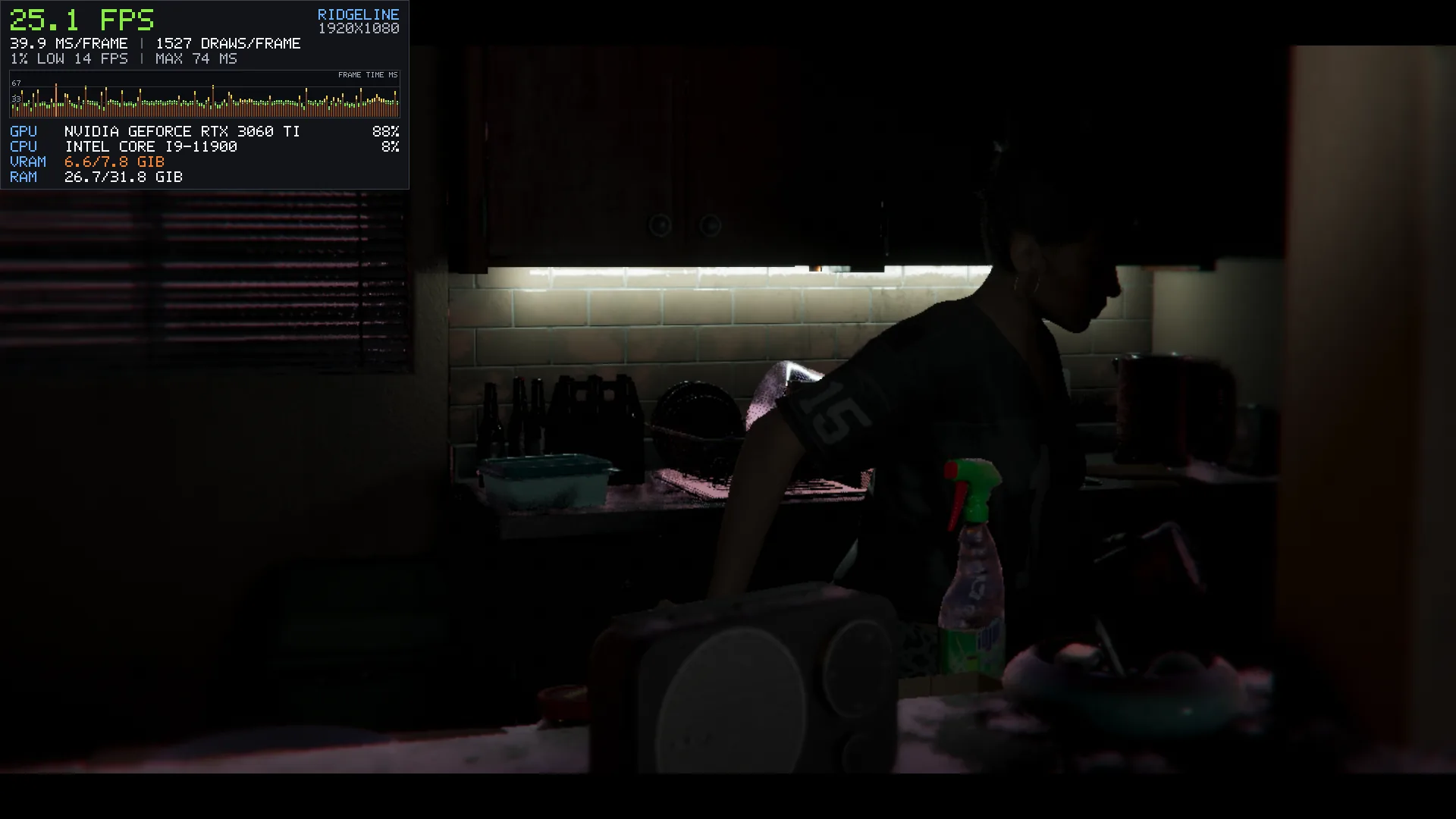
The title's opening: a kitchen at night, a strip of light over the worktop. The layer's view in the corner reads 25.1 frames a second.
27 November, development PC, the opening: a kitchen at night, a strip of light over the worktop. 25.1 frames a second in the layer's view.
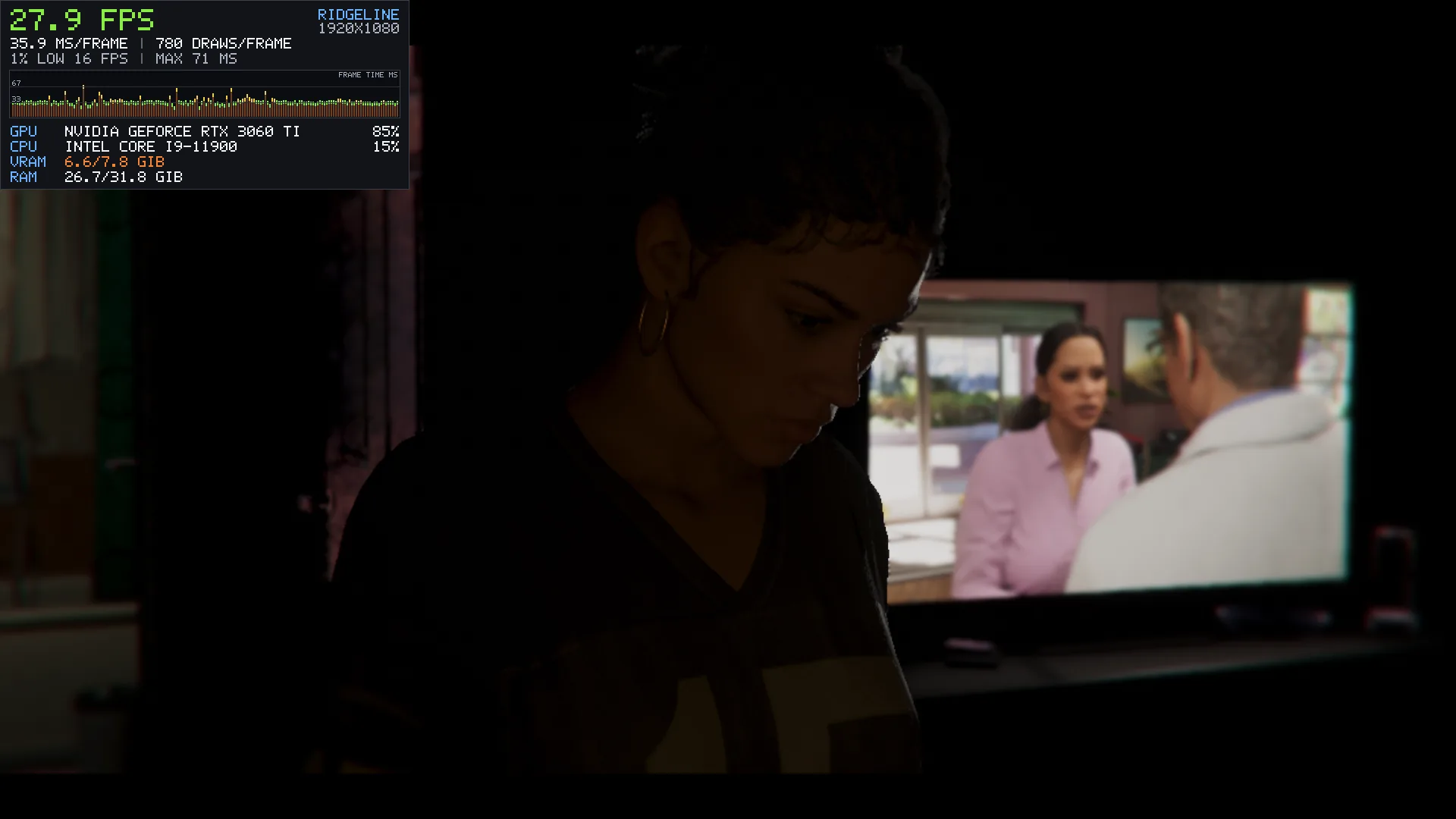
The title's opening: a woman passing a television. The layer's view in the corner reads 27.9 frames a second.
27 November, development PC, the opening: a woman passing a television. 27.9 frames a second in the layer's view.
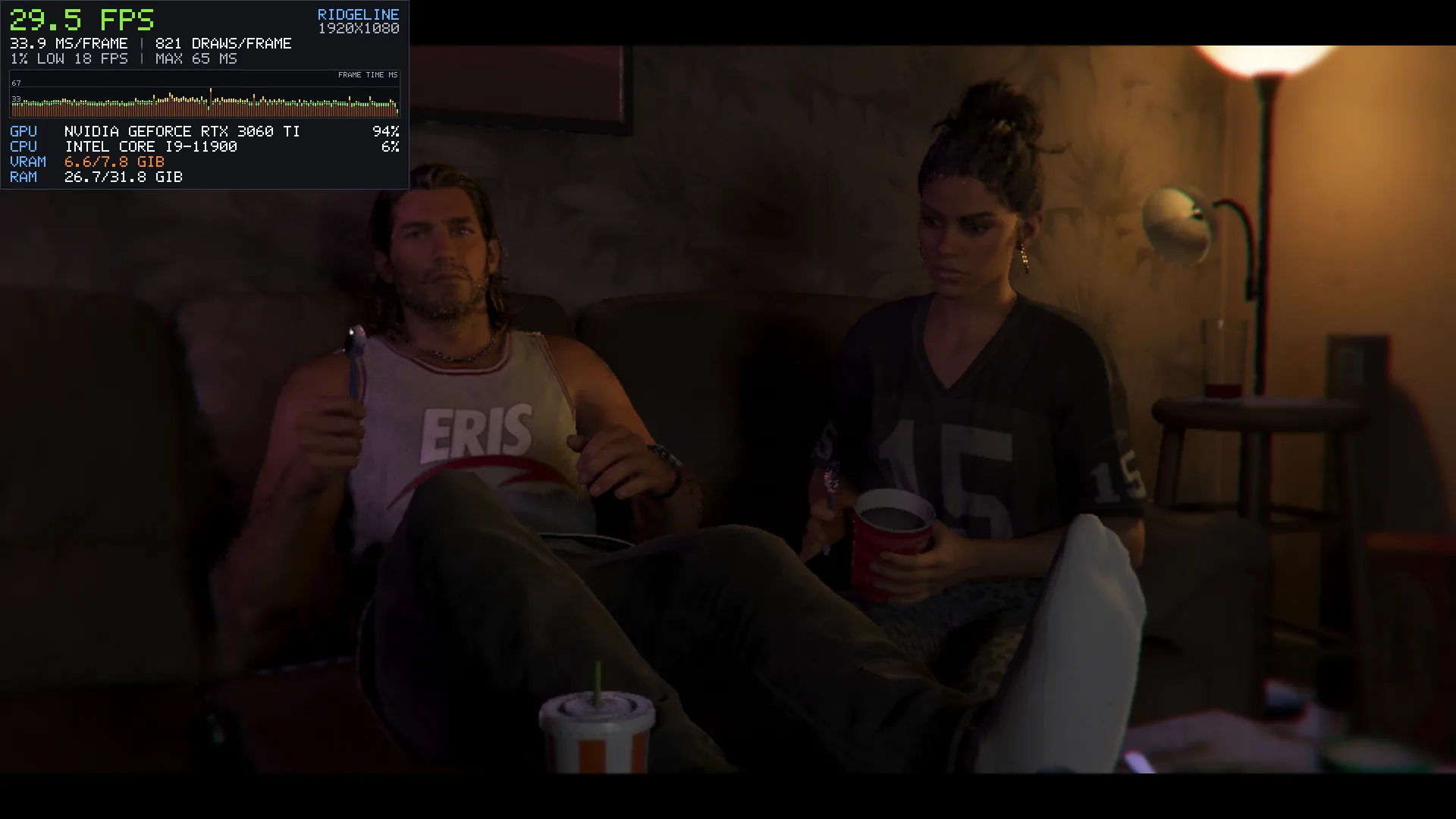
The title's opening: two people on a sofa under a lamp. The layer's view in the corner reads 29.5 frames a second.
27 November, development PC, the opening: two people on a sofa under a lamp. 29.5 frames a second in the layer's view.
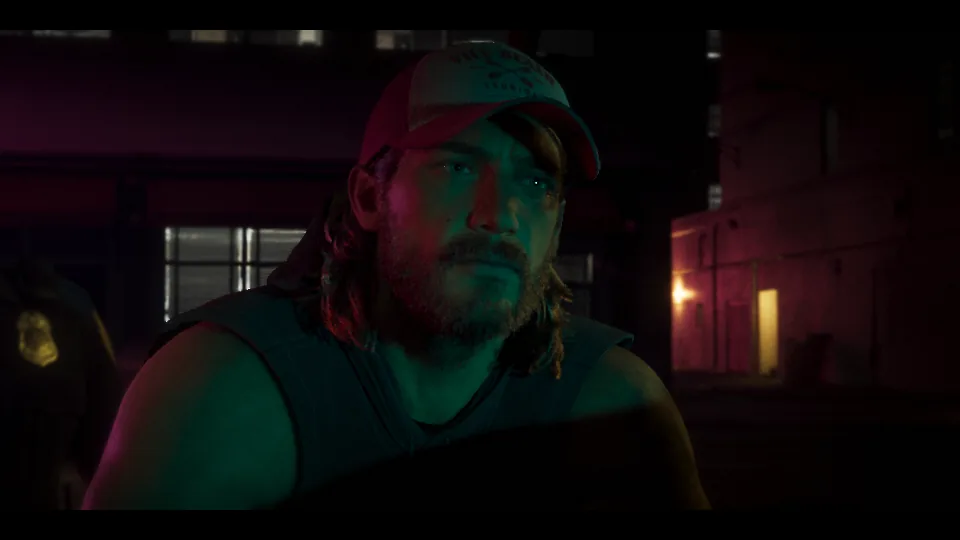
The title's opening: a man in a cap at night.
27 November, development PC, the first pictures from the opening: a man in a cap at night. 960 by 540, as the test harness saved them then.
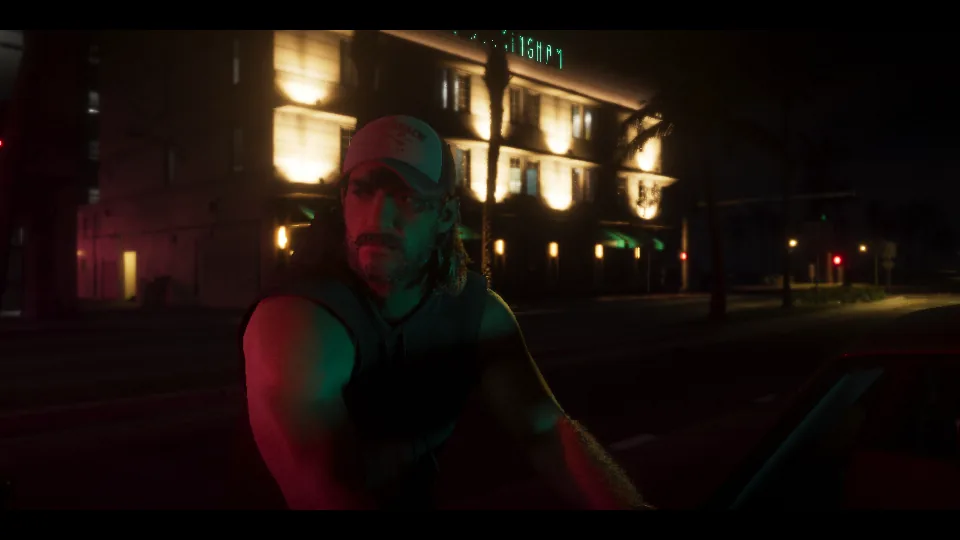
The title's opening: a man by a car in front of a lit building at night.
27 November, development PC, the first pictures from the opening: a man by a car in front of a lit building at night. 960 by 540, as the test harness saved them then.
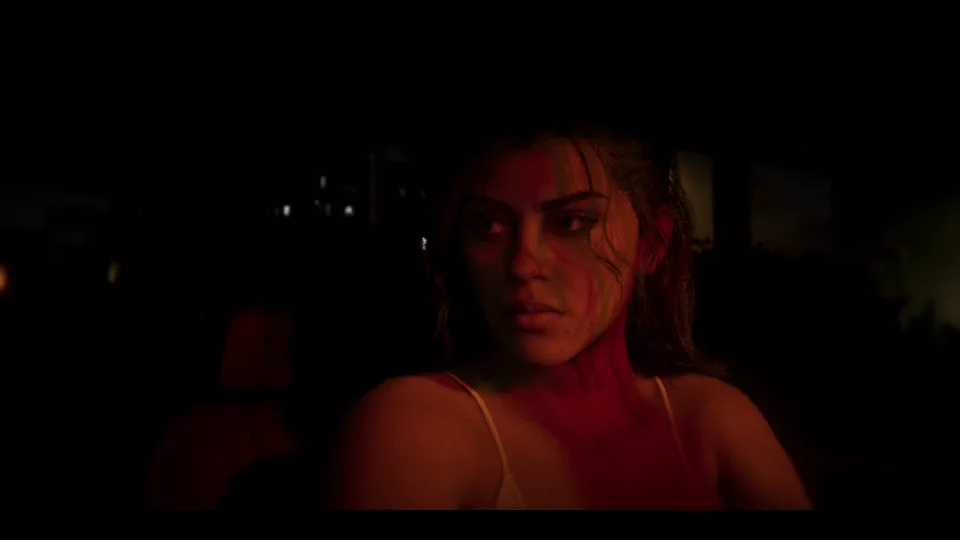
The title's opening: a woman in red light.
27 November, development PC, the first pictures from the opening: a woman in red light. 960 by 540, as the test harness saved them then.
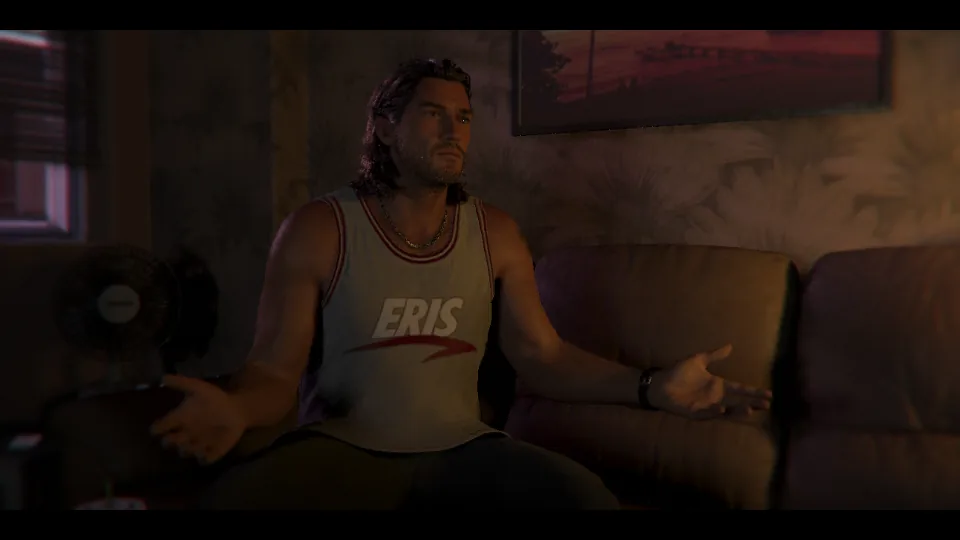
The title's opening: a man on a sofa.
27 November, development PC, the first pictures from the opening: a man on a sofa. 960 by 540, as the test harness saved them then.

None of the stills were played: the opening runs by itself, and the tester's play is in the videos. The title's ray-traced light is off in all of them, and the picture has not been checked against the console's.

Charts

Measurements, newest first
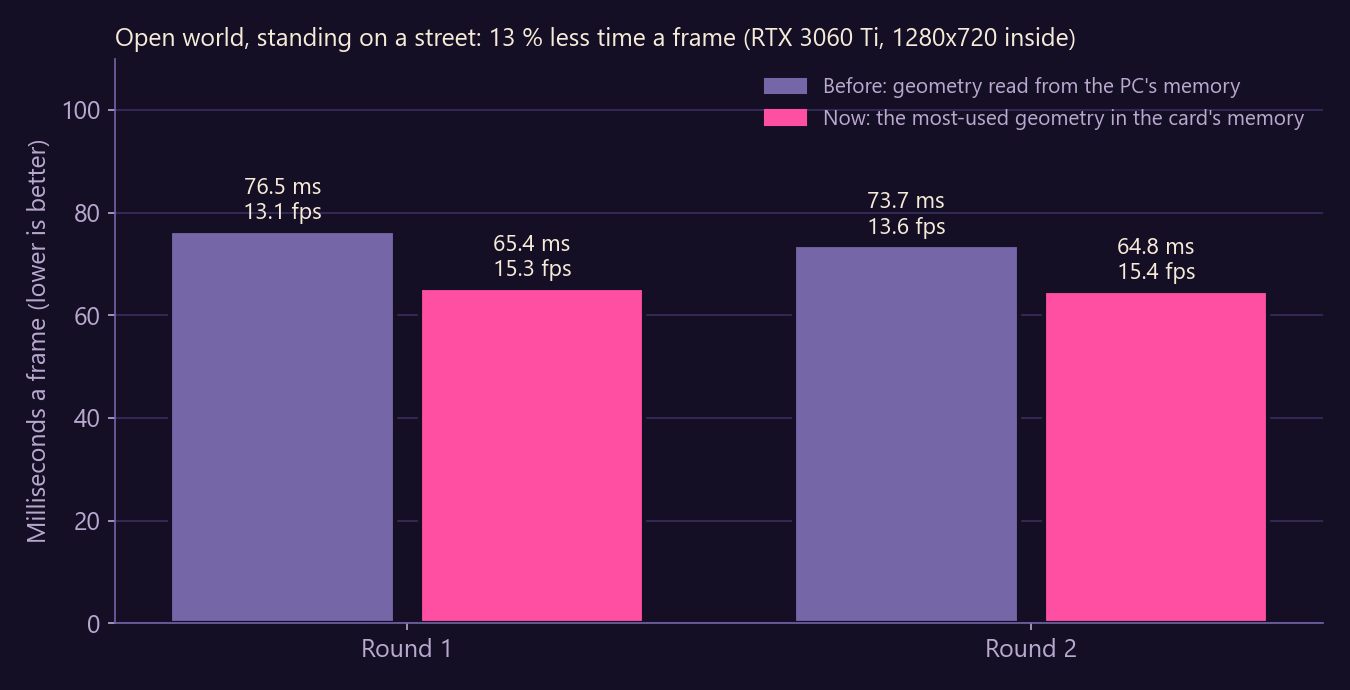
Bar chart of milliseconds a frame in the open world on the development PC, standing on a street, in two rounds. Round 1: 76.5 ms (13.1 frames a second) before, 65.4 ms (15.3) now. Round 2: 73.7 ms (13.6) before, 64.8 ms (15.4) now.
28 November, development PC (GeForce RTX 3060 Ti, 8 GB), open world: 13 % less time a frame once the most-used geometry is kept in the graphics card's own memory.
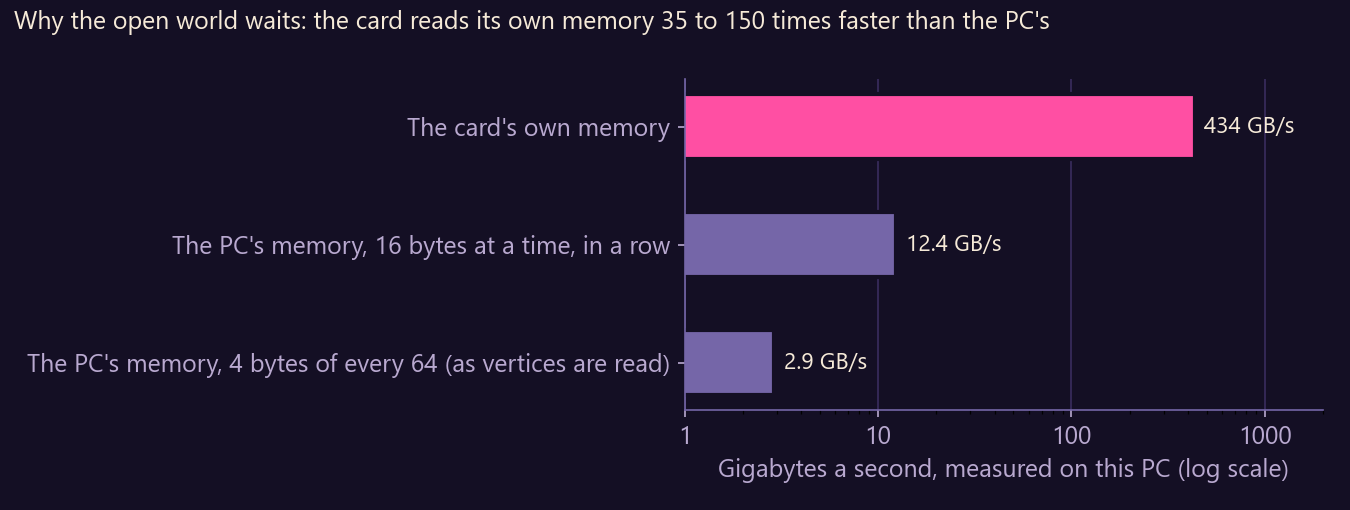
Bar chart on a log scale of how fast the development PC's graphics card reads memory: its own memory at 434 GB a second, the PC's memory at 12.4 GB a second in long runs, and at 2.9 GB a second in small scattered reads as vertices are read.
28 November, development PC: how fast the graphics card reads its own memory and the PC's.
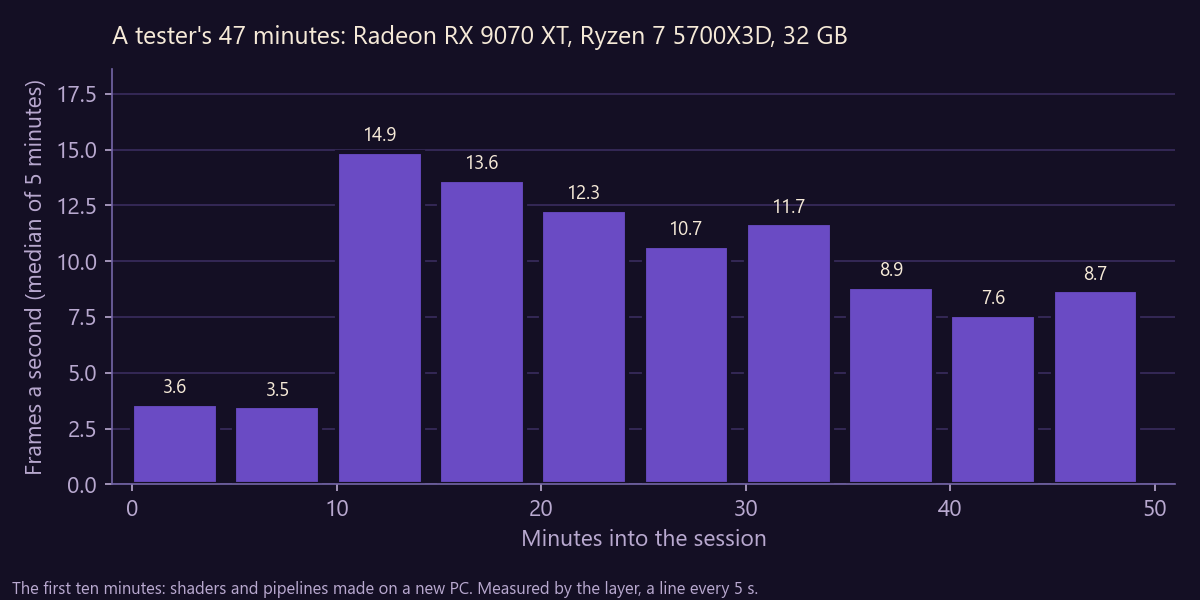
Bar chart of a tester's 47 minutes on a Radeon RX 9070 XT, Ryzen 7 5700X3D and 32 GB: the median frames a second of each five minutes. 3.6 and 3.5 in the first ten minutes, then 14.9, 13.6, 12.3, 10.7 and 11.7, then 8.9, 7.6 and 8.7 in the last fifteen.
28 November, a tester's PC (Radeon RX 9070 XT): 47 minutes in the open world, by five minutes. The first ten are slow while a new PC translates the title's shaders.
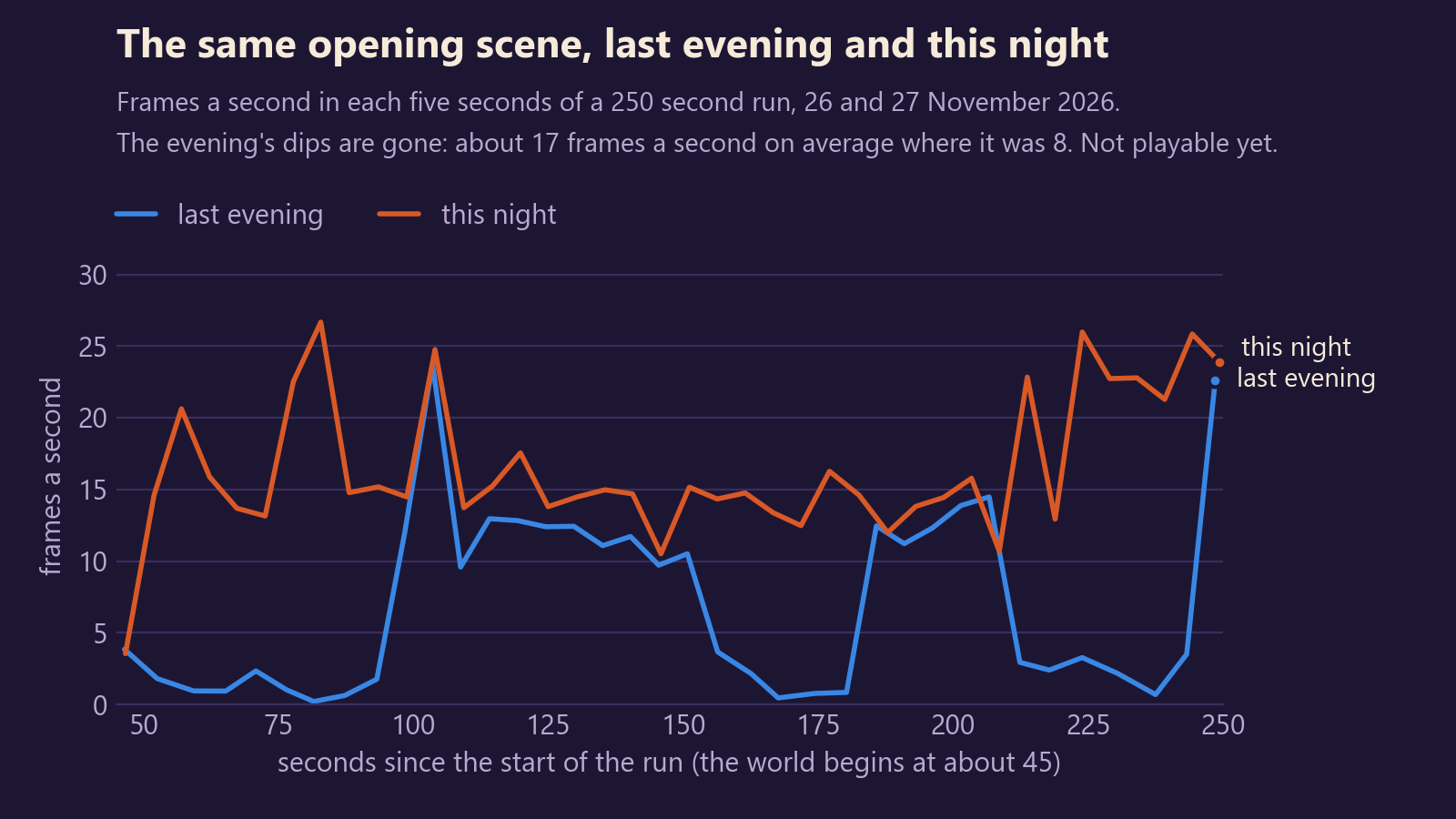
Line chart of frames a second in each five seconds of the same 250 second run of the opening, on the evening of 26 November and in the night to 27 November 2026. The evening line falls to between 0 and 4 three times. The night line stays between 10 and 27 the whole way.
27 November, development PC, the title's opening run by a script: the evening before against the night after the long pauses were found.
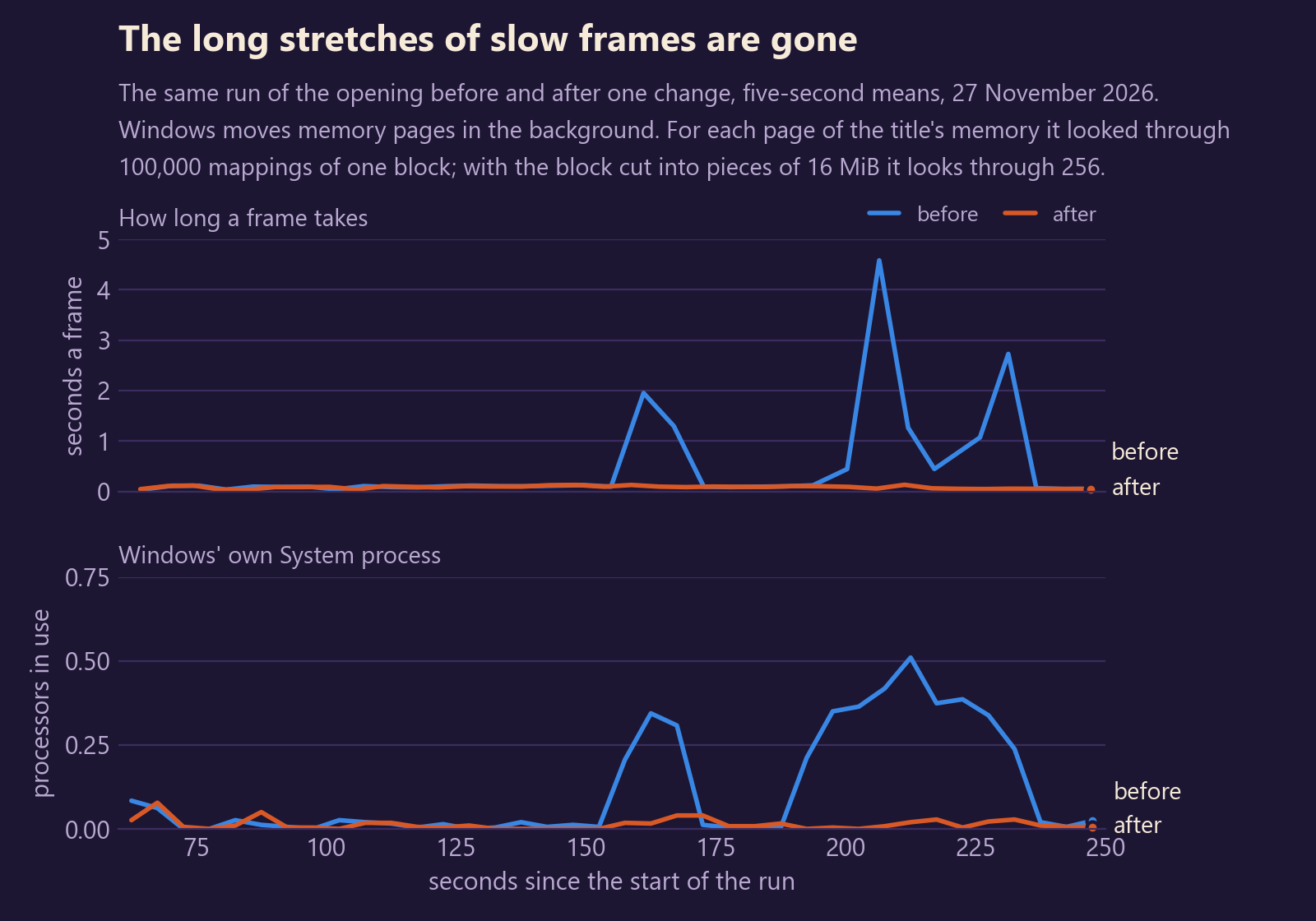
Two line charts over the same 250 second run, before and after one change. Above, seconds a frame: before, it rises to 2, 4.6 and 2.7 seconds in three places; after, it stays near 0.1. Below, how much of a processor Windows' System process uses: before, it rises to 0.35 and 0.5 in the same places; after, it stays near zero.
27 November, development PC: the pauses of seconds, and the operating system's work that caused them, before and after one change.
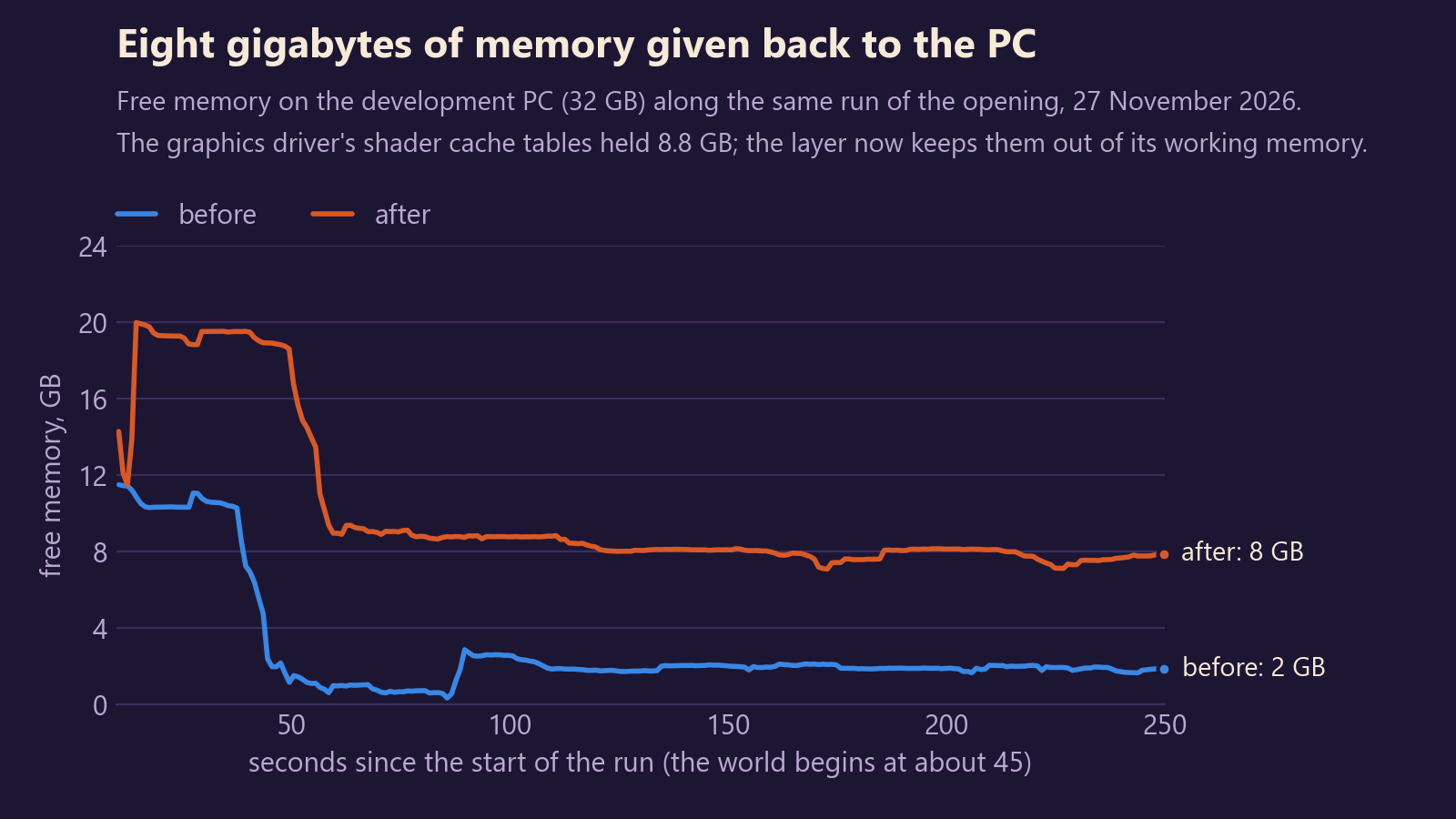
Line chart of free memory on the 32 GB development PC along the same run, before and after one change. Before, it falls to about 2 GB and stays there. After, it settles at about 8 GB.
27 November, development PC: free memory along the opening, before and after the graphics driver's shader cache tables were kept out of the layer's working memory.
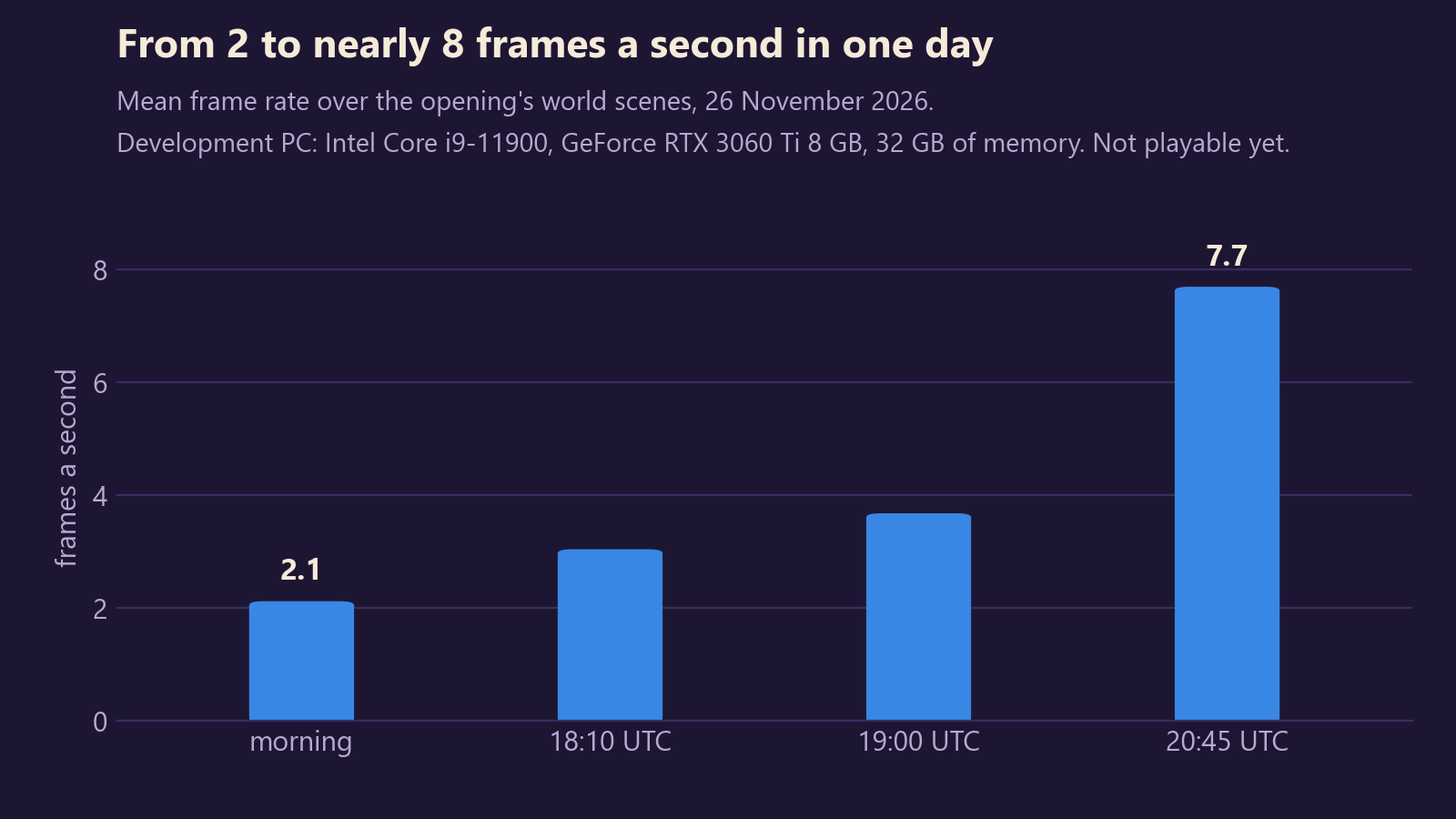
Bar chart of the mean frame rate at four moments of 26 November 2026: 2.1 frames a second in the morning, 3.0 at 18:10 UTC, 3.7 at 19:00 UTC and 7.7 at 20:45 UTC.
26 November, development PC, the opening: the average through the day. The last bar is without the title's ray-traced light and with a plain enlargement in place of its upscaler, so it is not like for like.

Visuals

The project's own

The Ridgeline Game Launcher logo over a shoreline at dusk
Banner, 1600 by 533 (WebP).
The Ridgeline Game Launcher logo over a shoreline at dusk, on the dark ground colour
Link preview, 1200 by 630 (JPEG).

Quoting a chart? Give the date, the PC and the part of the title its caption names. The current state with every caveat is in status.json.